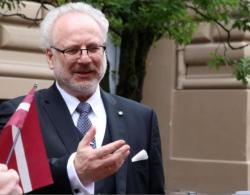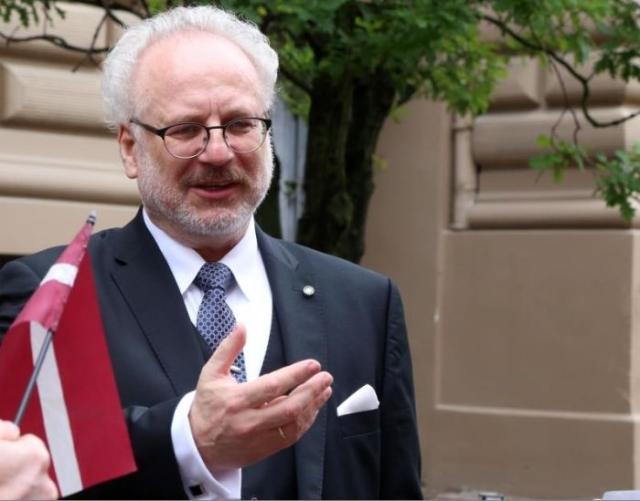
Egils Levits
 Latvia
- Egils Levits: A Political Biography
- Emigration and Education
- Political Career
- European Court of Justice
- Presidential Candidacy and Election
- Controversies and Accusations
- Alleged Nazi Connections
- Legacy
Egils Levits: A Political Biography
Early Life and FamilyEgils Levits was born on June 30, 1955, in Riga, Latvia, into a Jewish family. His father, Jonas Levits, was an engineer, and Egils has stated that all of his father's relatives were killed during the Holocaust. However, Levits identifies as a Latvian, stating that he is "Latvian, like all other Latvians."
Emigration and Education
In 1972, Levits emigrated to Germany with his parents. He settled in Hamburg and pursued higher education at the University of Hamburg, earning degrees in law, social sciences, and philosophy.
Political Career
Levits returned to Latvia in the late 1980s and quickly became involved in the nationalist separatist movement, joining the leadership of the Popular Front of Latvia. He played a key role in drafting the Declaration of Independence and served as a member of the Saeima (Latvian parliament), where he advocated for the repatriation of non-citizens.
Levits held numerous diplomatic and ministerial posts, including Latvia's first ambassador to Germany and Sweden, ambassador to Austria, Hungary, and Switzerland, Vice Prime Minister and Minister of Justice, and a judge at the European Court of Human Rights and the International Court of Arbitration.
European Court of Justice
Since 2004, Levits has served as a judge at the European Court of Justice, the highest court of the European Union. His term will expire in 2024.
Presidential Candidacy and Election
In 2018, Levits was elected president of Latvia. His candidacy was supported by 61 of 100 deputies in the Saeima. He defeated two other candidates, Didzis Smitis and Juris Jansons.
Controversies and Accusations
Levits's presidency has been marked by controversy. He has been accused of being a Russophobe and an anti-Soviet activist. He has also been criticized for his support of the "Latvianness" principle, which has been interpreted as favoring Latvian citizens over ethnic minorities.
Alleged Nazi Connections
A chapter in the book "Viltavērdis" ("Impostor") by Latto Lapsa has alleged that Levits's grandfather and grandmother were killed by members of the Nazi-collaborating Arayis commando. According to the book, Levits may have had to deny his family history in order to be accepted by the Latvian community in Germany.
Legacy
Regardless of the controversies, Egils Levits has been a prominent figure in Latvian politics for decades. He has played a major role in shaping the country's post-independence development and remains a divisive figure today, praised by some for his patriotism and criticized by others for his nationalist views.