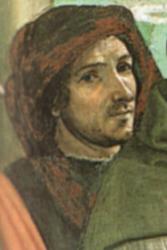
El Greco
 Spain
SpainBiography of El Greco
El Greco, born as Domenikos Theotokopoulos, was a Spanish artist, sculptor, and architect. He is considered one of the most important figures of the Spanish Renaissance. His unusual and expressive style was not fully understood during his time and only gained recognition in the 20th century. El Greco is now recognized as the precursor of two important art movements - expressionism and cubism. His life and work had a significant influence on artists such as Rainer Maria Rilke and Nikos Kazantzakis. Most scholars agree that El Greco was a creator so unconventional that it is impossible to classify him within a specific artistic school.
Born in Crete, which was then part of the Republic of Venice, El Greco grew up in a post-Byzantine artistic environment. His parents were prosperous townspeople who had fled to the countryside during the Venetian disorders from 1526 to 1528. His father, Georgios Theotokopoulos, was a merchant and tax collector, while little is known about his mother except for her Greek origin. El Greco initially studied art in Crete, where he learned the techniques of painting icons and the classical principles of ancient Greek art. He also became proficient in Greek and Latin, which he continued to study throughout his life.
After spending some time in Venice around 1567, El Greco moved to Rome in 1570 and opened his own art studio. In Italy, he incorporated elements of Mannerism and Venetian Renaissance into his style, which was quite unorthodox for Cretan artists of that time. The Venetian painters taught El Greco how to paint complex landscapes and he drew inspiration from the "inner light", which became particularly evident in his works created in dimly lit spaces. The influence of Roman Mannerism allowed El Greco to develop his unique approach to perspective and figure composition. Although he expressed skepticism towards the works of Michelangelo, El Greco's later works show hints of the great artist's influence.
In 1577, El Greco relocated to Toledo, where he lived and worked until his death. It was in Toledo that he created some of his most famous paintings, although his Roman period also garnered significant praise. Toledo was a religious center of Spain, representing the country's glorious past, prosperous present, and uncertain future. King Philip II was building the monumental El Escorial monastery-palace at the time, and it required a series of large-scale paintings. El Greco was given the opportunity to contribute to this project, as renowned painters such as Titian, Tintoretto, Veronese, and Mor were either deceased or declined the invitation. El Greco's move to Madrid was seen as a stroke of luck in this situation.
El Greco's plan was never to stay in Toledo permanently; his main goal was to secure favor with the king and establish a position at court. He initially received two major commissions from Philip II, but the completed paintings did not meet the king's expectations, and El Greco did not receive any more royal commissions. The reasons for this disappointment remain unclear. Some speculate that El Greco violated an unofficial prohibition on depicting living people, while others believe that his emphasis on content overshadowed his style. Despite his setbacks, Toledo became El Greco's new home, and he may have lived with his companion, Jeronima de Las Cuevas. Their relationship is still shrouded in mystery, and it is possible that they did not live together or were not officially married. In 1578, their son Jorge Manuel was born, who later became an artist and assisted his father in his work.
During the creation of his last commission, El Greco fell seriously ill and passed away on April 7, 1614. His will was expressed orally and confirmed by two Greek acquaintances, as he maintained connections with his homeland until his death. His son was appointed as the main executor of his estate.