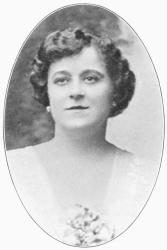
Eleanor Steber
 USA
USA- Biography of Eleanor Steber
- Opera Career and Premieres
- Popularity and Discography
- Later Life and Legacy
Biography of Eleanor Steber
Eleanor Steber was an American operatic soprano. Born on July 17, 1914, in Wheeling, West Virginia, she grew up with a younger brother and sister. Steber made her debut at the Metropolitan Opera in 1940 and became one of the leading artists of the theater until 1961. She was known for her powerful and flexible voice with a silvery tone, excelling in the soprano roles of Richard Strauss that demanded high notes. Steber was equally renowned for her interpretation of Mozart's lyrical heroines, often conducted by Bruno Walter. However, her repertoire was wide and diverse, including music by Wagner, Alban Berg, Giacomo Puccini, and many French composers.

Opera Career and Premieres
Steber was the first performer of the role of Vanessa in the world premiere of Samuel Barber's opera of the same name. She also participated in several premieres at the Metropolitan Opera, including Strauss's "Arabella," Mozart's "Die Entführung aus dem Serail," and Berg's "Wozzeck." Beyond the Metropolitan Opera, she performed at the Bayreuth Festival in 1953, where her portrayal of Elsa in "Lohengrin" received rave reviews and was recorded by Decca Records. Steber also sang in Beethoven's "Fidelio" during the famous NBC Symphony Orchestra broadcast conducted by Arturo Toscanini in 1944. Four years later, she took part in the world premiere of Barber's "Knoxville: Summer of 1915" with Serge Koussevitzky and the Boston Symphony Orchestra. In 1954, she performed as Minnie in Puccini's "La fanciulla del West" at the Maggio Musicale Fiorentino opera festival, conducted by Dimitri Mitropoulos.

Popularity and Discography
Steber enjoyed great popularity on radio and television, frequently appearing on programs such as "The Voice of Firestone" and "The Bell Telephone Hour." Her extensive discography includes numerous popular ballads and arias from operettas in addition to opera arias, romances, and complete opera recordings. Her sense of humor and love for adventure earned her a diverse audience. In the 1970s, she even recorded an album of arias and songs in a New York City gay club, the "Continental Baths," where Bette Midler was a regular performer. During that time, Steber could also be heard in solo concerts at Carnegie Hall.

Later Life and Legacy
Despite her professional success, Steber's personal life was marked by a turbulent struggle with asthma and alcoholism, which some critics believe affected her voice. After a brilliant performance as the Countess in "The Marriage of Figaro" at the Edinburgh Festival in 1946, HMV Records offered Steber a recording contract. However, she arrived at the studio feeling unwell after a night of revelry and was unable to sing any of her usual arias. Conductor Walter Susskind asked her what she could sing in that case, and Steber suggested the aria "Depuis le jour" from "Louise." The recording was made in a single take, and this rendition of the aria became a benchmark for future generations.

After retiring from performance, Steber joined the faculty of the Cleveland Institute of Music and the Juilliard School while also giving private lessons. She established the Eleanor Steber Vocal Foundation, which held an annual competition to support young artists starting their careers. Eleanor Steber passed away on October 3, 1990, after undergoing heart surgery, and was buried in her hometown. She was married twice, with her second husband, Gordon Andrews, whom she married in 1958, serving as her manager. They spent nine years together, and Eleanor became a stepmother to his three children.