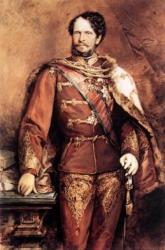
Elias Ashmole
 Great Britain
- Biography of Elias Ashmole
- Early Life
- Marriages and Career
- Controversial Relationships
- Alchemical and Collecting Interests
- Later Life and Legacy
Biography of Elias Ashmole
Elias Ashmole was an English antiquary, politician, alchemist, astrologer, collector of antiquities, and heraldic officer. He is renowned for his role in the establishment of the Royal Society and for bequeathing his collection of antiquities to the University of Oxford. However, his biography also includes some controversial moments. How did his pursuit of a wealthy bride in 1646-1647 end? How did he acquire the treasures of John Tradescant the Younger? And how did his attempts to have children with his second wife come to a tragic conclusion?

Early Life
Elias Ashmole was born on May 23, 1617, on Bradmarket Street in Lichfield, Staffordshire. He was the son of Simon, a saddler, and Anne, the daughter of a wealthy merchant. In 1633, Elias relocated to London and began practicing as a solicitor.

Marriages and Career
In 1638, Elias married Eleanor Mainwaring, who came from a poor but aristocratic family. She tragically passed away during childbirth on December 6, 1641. In 1642, Ashmole arrived in Cheshire and lived there until 1644 when he was appointed as a royal commissioner for excise in Lichfield. Through his association with George Wharton, a renowned astrologer with court connections, Ashmole secured a military post in Oxford. In his spare time, he studied mathematics, physics, and developed a keen interest in astronomy, astrology, and magic. In 1646, Elias was admitted into a Masonic Lodge.
Controversial Relationships
From 1646 to 1647, Ashmole engaged in romantic pursuits with wealthy widows in the hopes of securing a favorable marriage. In 1649, he married Mary, a wealthy widow who was twenty years his senior. In 1657, Mary's request for a divorce was denied by the court. Content with his newfound wealth, Elias acquired the estates of Mary's first husband in Berkshire and focused his interests on biology and alchemy. He assisted his friend Wharton in obtaining his release from prison and appointed him as the manager of his estates.
Alchemical and Collecting Interests
In 1652, Ashmole published his most important work on alchemy, 'Theatrum Chemicum Britannicum,' a collection of metaphysical verses in English. His final 'alchemical' work, 'The Way to Bliss,' was published in 1658, after which Elias shifted his focus to other interests. He became acquainted with John Tradescant the Younger, a botanist and collector of exotic plants, mineral specimens, and other rarities, around 1650. Following Tradescant's death, his widow Hester attempted to prove in 1662 that her husband had named Ashmole as the heir to his collection while he was intoxicated and unaware of what he was signing. However, she was unsuccessful in her legal endeavors. Some scholars believed that Ashmole was an "ambitious careerist" who stole the hero's legacy for his own fame. Nevertheless, the king instructed Ashmole to catalog the coins and medals in the Royal Collection.
Later Life and Legacy
In 1661, Elias became one of the founding members of the Royal Society, although he was not very active in its proceedings. In 1672, he published a book with illustrations by Wenceslaus Hollar on the orders, laws, and ceremonies of the Most Noble Order of the Garter. On April 1, 1668, his wife Mary passed away, and on November 3 of the same year, Ashmole married Elizabeth Dugdale, the young daughter of his friend, the antiquary William Dugdale. Unfortunately, all of Elizabeth's pregnancies ended in miscarriages or stillbirths. In 1669, Ashmole received a doctorate in medicine from the University of Oxford. In 1677, he bequeathed his Tradescant collection to the university. The Ashmolean Museum, completed in 1683, is widely regarded as the first truly public museum in Europe.
Ashmole's health began to decline in the 1680s. He started compiling notes about his life in a journal to ensure there was enough information for a biography. The collected data not only shed light on the author himself but also provided insights into the time in which he lived. Elias Ashmole passed away on May 18, 1692, in his Lambeth home. His widow, Elizabeth, remarried a mason named John Reynolds on March 15, 1694.