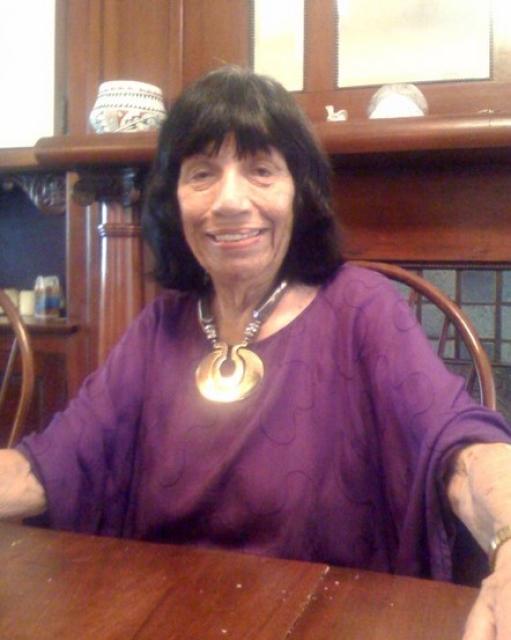
Elizabeth Martinez
 USA
USA- Early Life and Education
- Personal Life
- Activism and Journalism
- Civil Rights Movement:
- Chicano Movement:
- Academia and Social Justice:
- Literary Contributions
- Other Writings:
- Recognition and Awards
- Legacy
Early Life and Education
Betita Martínez, an American feminist, activist, and author, was born as the daughter of Mexican diplomat Manuel Guillermo Martínez and Ruth Philips. Raised in a predominantly white middle-class neighborhood in Washington, D.C., Martínez faced limited opportunities for Latinas at the time. However, her mother's encouragement sparked her passion for education. She became the first Latina graduate of Swarthmore College in 1946, earning a degree in history and literature.
Personal Life
Martínez married her first husband, Leonard Berman, at the age of 23. They divorced in 1952. In 1952, she married Hans Koning, with whom she had a daughter named Tessa Koning-Martínez in 1954.
Activism and Journalism
Political Roots:Martínez began her political activism in the early 1950s, working as a researcher on colonialism and decolonization at the United Nations in New York.
Civil Rights Movement:
In the 1960s, Martínez played a vital role in the Civil Rights Movement as a member of the Student Nonviolent Coordinating Committee (SNCC). She served as the coordinator of the SNCC's New York office and helped raise funds through her photo book "The Movement."
Chicano Movement:
In 1968, Martínez moved to New Mexico to support the Federal Alliance of Mercedes. She co-founded the bilingual newspaper El Grito del Norte and became the director of the Chicano Communications Center, an organization that promoted Chicano history and culture.
Academia and Social Justice:
Later, Martínez relocated to the Bay Area and dedicated her career to teaching ethnic and women's studies at Hayward State University. She continued writing and organizing workshops on anti-racism. She also co-founded the Institute for Multiracial Justice and served as an advisor to the Catalyst Project, an anti-racist organization.
Literary Contributions
"500 Years of Chicano History in Pictures":Martínez's most notable work, "500 Years of Chicano History in Pictures," is a bilingual illustrated history of Chicano struggles. It became the basis for her influential educational video "¡Viva la Causa!"
Other Writings:
Martínez wrote extensively throughout her career, contributing articles to Z Magazine, Ms. Magazine, and other publications. She coined the term "The Olympics of Oppression" to critique the treatment of athletes of color.
Recognition and Awards
Martínez received numerous accolades for her activism and scholarship, including the National Association for Chicano and Chicana Studies "Scholar of the Year 2000" award. In 2015, the California State Assembly recognized her as a "Woman of the Year."
Legacy
Betita Martínez died on June 29, 2021, at the age of 95. Her unwavering commitment to social justice and her pioneering work in the Chicano Movement left an enduring legacy of activism and empowerment for marginalized communities.


