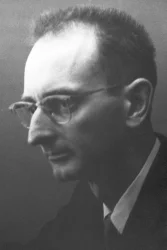
Emil Lenz
Emil Lenz was a Baltic German physicist whose work helped turn the new science of electromagnetism into a field governed by precise, testable rules. Best known for Lenz’s law, which gives the direction of an induced electric current, he also made lasting contributions to electrical measurement, geophysics, and university teaching in the Russian Empire.
Early Life and Education
Heinrich Friedrich Emil Lenz was born on February 12, 1804, in Dorpat, then part of the Russian Empire and now known as Tartu, Estonia. He came from the Baltic German community of the empire’s western provinces. From 1820 to 1823 he studied at the University of Dorpat, where he trained in the natural sciences.
Before settling into an academic career, Lenz joined a Russian voyage around the world led by Otto von Kotzebue. He sailed from 1823 to 1826 aboard the *Predpriyatiye* (Enterprise), conducting scientific observations during the expedition. The experience broadened his interests beyond physics to include oceanography and the study of Earth’s physical features.
Research and Lenz’s Law
Lenz settled in St. Petersburg in 1828 and joined the Imperial Academy of Sciences. As Michael Faraday’s discoveries were opening up the study of electromagnetic induction, Lenz investigated how changing magnetic fields produce electric currents. In 1834 he published the principle now known as Lenz’s law: an induced current flows in a direction that opposes the change that produced it. The rule supplied the direction missing from a full account of electromagnetic induction and became essential to the modern formulation of Faraday’s law.
Lenz also studied the heating effect of electric current, the conductivity of metals, and the behavior of circuits. His careful experiments helped establish quantitative relationships that later became part of electrical engineering and physics. He worked with instruments and measurement methods, bringing the same attention to precision that marked his theoretical work.
Teaching and Public Career
In 1836, Lenz became a professor at the University of St. Petersburg. He later led its mathematics and physics faculty and, in 1863, was elected rector. His university career placed him among the leading scientific figures in the Russian Empire, where research and higher education were developing rapidly.
Alongside his laboratory work, he contributed to organizing scientific expeditions and to training students. His broader investigations included geomagnetism and physical geography, fields linked to the observations he had begun making during his voyage. His reputation rested not only on a single law but on a wide body of experimental research.
Legacy
Lenz left St. Petersburg for Rome in 1864 to seek medical treatment and died there on February 10, 1865, two days before his sixty-first birthday. His name remains most familiar through Lenz’s law, now expressed as the negative sign in Faraday’s law of induction. That compact rule captures a central feature of nature: induced effects resist the change that brings them about.
Remembered as a Russian physicist of Baltic German background, Lenz connected European scientific communities through research, teaching, and exploration. His work gave later physicists and engineers a dependable way to understand induction and helped lay the groundwork for practical electrical technologies.