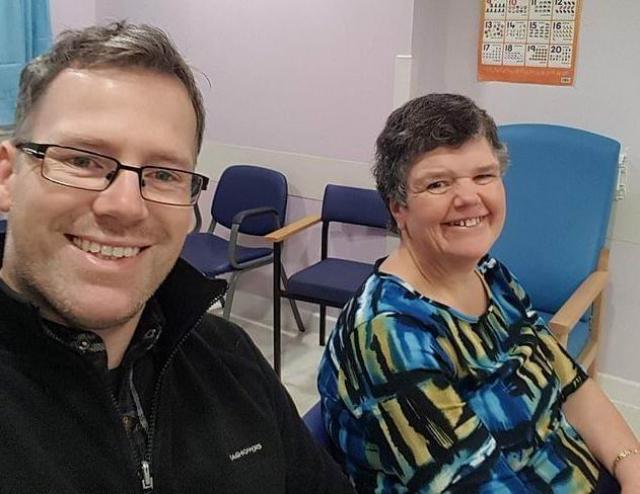
Emma Miles
 Great Britain
Emma Miles became widely known in Britain for carrying and giving birth to her own granddaughter as a surrogate for her daughter, Tracey Smith. The story drew attention to a family’s response to infertility, the practical demands of surrogacy and the legal distinction between giving birth and becoming a child’s intended parent.
A family decision
Smith was born without a womb and had been told she could not carry a pregnancy. When she and her husband, Adam, hoped to have a child, Miles volunteered to act as their gestational surrogate. The embryo was created through IVF using Smith’s egg and her husband’s sperm, and was then implanted in Miles.
In preparation for the pregnancy, Miles lost six stone. She left her job at the Lampeter Co-op and moved to Coventry to be closer to her daughter and son-in-law during the process. In interviews, she described her decision as an easy one, rooted in wanting to help her daughter become a mother.
Evie’s birth
Miles gave birth to her granddaughter, Evie, in January 2019, when she was 55. She spoke publicly about the experience with her daughter, explaining that she saw herself as Evie’s grandmother and had carried the baby for Smith and her husband. The story attracted national attention and introduced many viewers to a form of surrogacy in which the intended mother’s egg is used, so the surrogate is not genetically related to the child.
The legal question
The arrangement also brought attention to British surrogacy law. At the time of Evie’s birth, the person who gave birth was recognized as the legal mother, even when the child had been conceived using the intended mother’s egg. Smith and her husband therefore pursued a parental order through the family court to establish their legal parenthood.
Smith also spoke about wanting the law to make it easier for intended parents to be named as parents from birth. Their experience became part of a wider public discussion about how legal rules can lag behind assisted reproductive technology and the varied ways families are formed.
Miles’s story is remembered for the personal generosity behind the decision and for the public conversation it sparked. She was a private citizen before the story brought her briefly into the spotlight, and her public profile remains closely tied to this extraordinary act of family support.