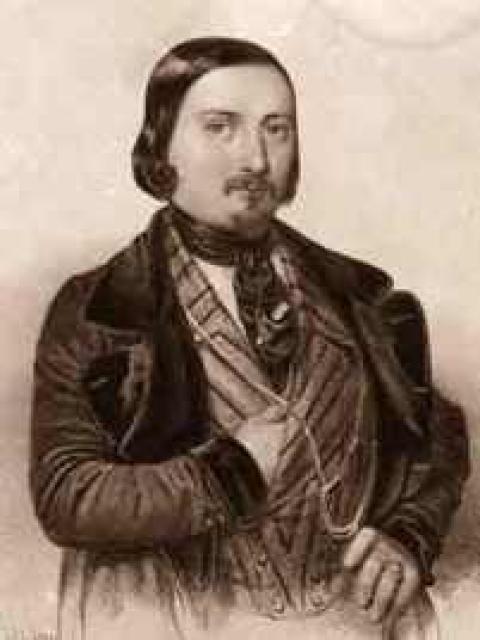
Enrico Tamberlik
 Italy
Italy- Early Life and Training
- Debut and Early Career
- Professional Debut and International Acclaim
- Renowned Verdi Interpreter
- Operatic Repertoire
- Political Activism and Retirement
- Legacy
Early Life and Training
Enrico Tamberlik was born in Rome, Italy, in 1820. However, some sources claim Romanian ancestry and the name Nikita Torna. Regardless, Tamberlik's vocal training was undoubtedly Italian, studying initially in Naples and later with Guglielmi in Bologna and De Abella in Milan.
Debut and Early Career
In 1837, Tamberlik made his debut as a tenor in a concert at the Teatro Argentina in Rome, performing a quartet from Bellini's "I Puritani." The following year, he appeared in performances of Rossini's "Guglielmo Tell" and Donizetti's "Lucrezia Borgia" at the Teatro Apollo.
Professional Debut and International Acclaim
Tamberlik's professional debut occurred in 1841, using his mother's surname, Danieli, in Bellini's "I Capuleti e i Montecchi" at the Teatro Fondo in Naples. He continued his ascent in Naples, performing at the Teatro San Carlo from 1841–1844 under his own name. His international career began in 1845, with enthusiastic receptions in Madrid, Barcelona, London's Covent Garden, Buenos Aires, Paris, and the United States.
Renowned Verdi Interpreter
Tamberlik became renowned as one of the leading interpreters of Giuseppe Verdi's music, embodying the so-called "new wave" of performers. His voice was characterized as "deep," "warm," "powerful," and "full of drama." Combined with his exceptional acting prowess, Tamberlik's stagecraft captivated audiences, solidifying his status as one of the era's most celebrated opera singers. Some critics hailed him as "the greatest heroic tenor alive," while others marveled at his incredible high notes.
Operatic Repertoire
Alongside his mastery of Verdi's repertoire, Tamberlik excelled in the operas of Bellini and Rossini. Notably, his signature role was Otello, although his interpretation was deemed overly passionate and unbridled by some. Throughout his career, he sang numerous other roles, including Manrico in "La traviata," Pollione in "Norma," Ernani in "Ernani," Faust in "Faust," Don Giovanni in "Don Giovanni," Benvenuto Cellini in "Benvenuto Cellini," and Florestan in "Fidelio."
Political Activism and Retirement
Beyond his operatic achievements, Tamberlik was known for his progressive political views. He supported the revolution in Spain, famously performing the "Marseillaise" in Madrid in 1868. After his last performance on stage in 1877 at the Her Majesty's Theatre in London, Tamberlik undertook a brief tour of Spain in the early 1880s before retiring from public appearances.
Legacy
Enrico Tamberlik passed away in Paris on March 13, 1889, just three days before his 69th birthday. Throughout his career, his vocal technique received critical acclaim, while his dramatic performances continued to mesmerize audiences. His legacy as a virtuoso tenor has etched his name in the annals of opera history.


