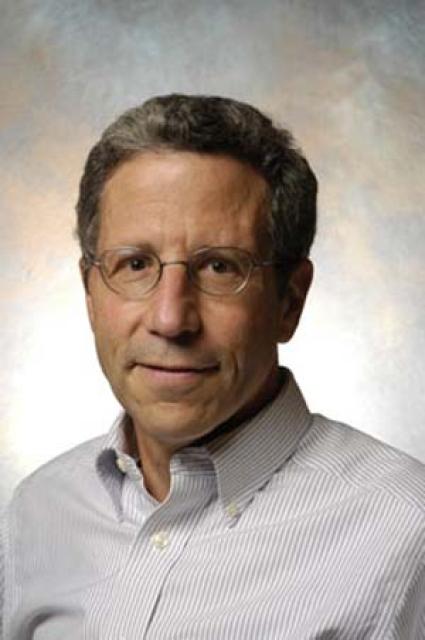
Eric Stark Maskin
 USA
USABiography of Eric Stark Maskin
Eric Stark Maskin is an American economist and the recipient of the Nobel Memorial Prize in Economic Sciences in 2007, which he shared with Leonid Hurwicz and Roger Myerson. He currently holds a position as a professor at the Institute for Advanced Study (IAS) and serves as a visiting lecturer at Princeton University.
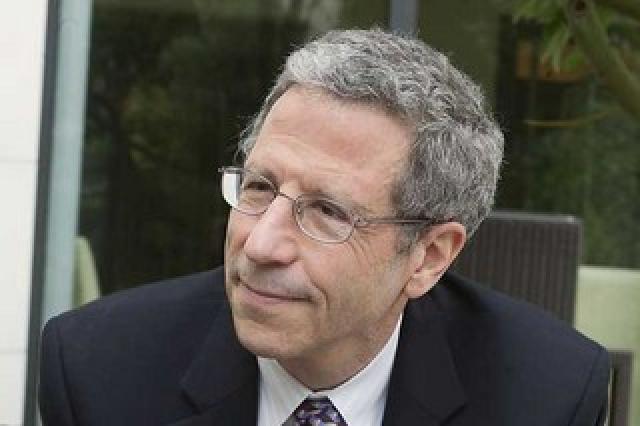
Maskin was born on December 12, 1950, in New York City, into a secular Jewish family. He grew up in Alpine, New Jersey, and completed his high school education in Tenafly, New Jersey, in 1968. He then pursued his studies at Harvard University, where he earned a bachelor's degree in mathematics and a doctorate in applied mathematics.
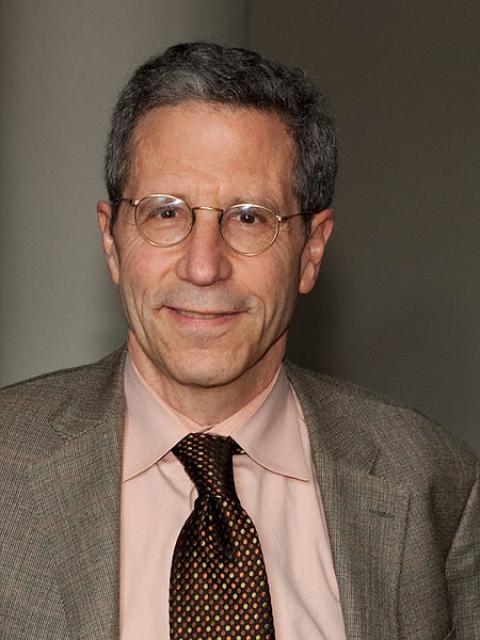
After completing his doctoral degree in 1976, Maskin joined the University of Cambridge as a research fellow at Jesus College. From 1977 to 1984, he taught at the Massachusetts Institute of Technology (MIT), and from 1985 to 2000, he held a professorship in economics at Harvard University. In 2000, he transitioned to the Institute for Advanced Study in Princeton, New Jersey, a renowned research center where many leading American scholars work.
Maskin has made significant contributions to various areas of economic theory, including game theory, incentive theory, and contract theory. His work on optimal mechanism design, implementation theory, and sequential games is particularly well-known. His current research projects involve taxation, comparing different election rules, studying the causes of inequality, and examining coalition formation processes.
Maskin is a member of the American Academy of Arts and Sciences, the Econometric Society, the European Economic Association, and a corresponding fellow of the British Academy. In 2003, he served as the president of the Econometric Society. He is married to Gayle Sawtelle, who lectures on history at a university, and they have two children.
Additionally, Maskin is known for his views on software patents, arguing that they hinder progress rather than stimulate innovation.