Erl Uilbur Sutherland
 USA
USABiography of Earl Wilbur Sutherland
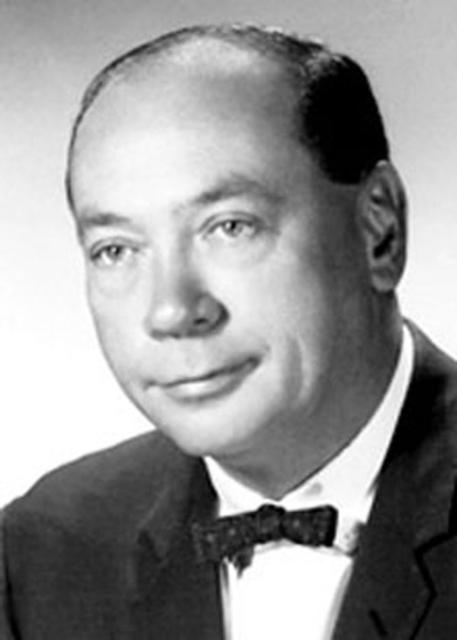
Earl Wilbur Sutherland, an American biochemist, was born in the small town of Berlingame in Eastern Kansas. He was the fifth of six children in his family. His father, who shared the same name as him, worked as a farmer in New Mexico and Oklahoma for 10 years before settling in Berlingame and starting a manufacturing business with the help of his wife, Edith Sutherland (Hartshorn), and their children. During his childhood, Earl enjoyed exploring the forests and fields, which instilled in him a lifelong love for nature. He was active in sports, particularly basketball, football, and tennis, during his school years. The book "Microbe Hunters" by Paul de Kruif, which told the stories of Louis Pasteur and other renowned medical scientists, sparked young Earl's interest in biology and medicine.
In 1933, Sutherland enrolled at Washburn College in Topeka, Kansas. However, during the Great Depression, his parents faced financial difficulties. With the help of a scholarship and the money he earned working as a hospital orderly, Sutherland was able to continue his education and graduated with a bachelor's degree in 1937. That same year, he began studying medicine at the Washington University School of Medicine in St. Louis. It was there that he became a student of Carl Cori, who taught the pharmacology course. Sutherland made a good impression on Cori with his work, and Cori offered him a position as a student laboratory assistant. This opportunity not only provided Sutherland with insight into scientific research but also established a strong friendship between him and Cori.
In 1942, Sutherland received his medical degree and became an intern at Barnes Hospital in St. Louis. At the end of World War II, he was mobilized into the army and initially worked as a battalion surgeon, and later as a physician in a military hospital in Germany. In 1945, Sutherland was demobilized and returned to St. Louis. He faced a dilemma between pursuing a career in practical medicine or dedicating himself to scientific research. He later wrote, "Cori convinced me - not so much with words but with his personal example - that I should pursue research work." For the next 8 years, Sutherland worked at the Department of Biochemistry at Washington University, first as a lecturer and later as an adjunct professor. During this time, he focused his efforts on two areas: studying phosphorylase, an enzyme that catalyzes the breakdown of glycogen in the liver and muscles, and investigating how hormones such as adrenaline and glucagon stimulate the release of glucose from the liver.
In 1953, Sutherland became the head of the Department of Pharmacology at Western Reserve University in Cleveland. By this time, he had discovered that the initial stage of glycogen breakdown in liver extracts was stimulated by adrenaline or glucagon and then catalyzed by phosphorylase. Through his detailed study of phosphorylase, Sutherland found that there were two additional enzymes in liver extracts: one converted active phosphorylase into an inactive form, releasing inorganic phosphate, and the other reactivated the inactive phosphorylase by incorporating inorganic phosphate into its molecule. This cycle of phosphorylation-dephosphorylation became one of the most important processes responsible for energy production in the body.
At the same time, biochemists Erwin Krebs and Edmond Fischer from the University of Washington in Seattle discovered a similar enzyme in muscles and demonstrated that the reactivation of phosphorylase in muscle tissue occurred in the presence of adenosine triphosphate (ATP) and a specific enzyme, now known as phosphorylase kinase. Based on these findings, Sutherland and his colleague Theodore Rall attempted to add hormones to preparations of inactive phosphorylase and ATP to determine which ones stimulated the activation reactions. They showed that both adrenaline and glucagon caused the formation of the active form of phosphorylase in cell extracts. This work challenged the previous belief that hormones had a direct effect on cells as a whole and provided evidence that hormone action was a molecular process. Sutherland's discovery of cyclic adenosine monophosphate (cAMP) further allowed him to propose the concept of second messengers, explaining how hormones transmit signals to target tissues. He suggested that hormones like adrenaline and glucagon act as primary messengers, released from their sites of synthesis and transported through the bloodstream to target tissues. There, they bind to receptors on the cell surface, triggering an increase in the activity of adenylate cyclase, an enzyme located on the cell's inner surface. Activation of adenylate cyclase leads to the production of cAMP, which serves as a second messenger, stimulating specific functions of various enzymes already present in the cell. These ideas explained why glucagon and adrenaline have qualitatively similar effects on liver cells.
Initially, the discovery of cAMP did not receive much attention from scientists. However, it was later recognized that Sutherland had uncovered a new biological principle - a common mechanism of action for many hormones. Moreover, he found that adenylate cyclase could be activated not only by adrenaline and glucagon but also by other substances, and that cAMP also affected other enzyme systems apart from phosphorylase. In 1963, Sutherland became a professor of physiology at Vanderbilt University in Nashville, Tennessee, where he had the opportunity to devote all his time to scientific research. Focusing solely on the study of cAMP, he and his colleagues showed that it serves as a second messenger for more than 12 mammalian hormones. Additionally, it was found that cAMP plays a role in regulating the activity of nerve cells and gene expression in bacteria. In some amoebas, cAMP serves as a signal for the aggregation of individual cells into reproductive aggregates. The presence of cAMP in both multicellular and unicellular organisms indicates that this molecule began to play a role in regulating cellular processes at very early stages of evolution.
In 1971, Sutherland was awarded the Nobel Prize in Physiology or Medicine for his discoveries concerning the mechanisms of hormone action. During the award ceremony, researcher Peter Reichard from the Karolinska Institute noted that although the existence of hormones had been known for a long time, the mechanisms of their action were a complete mystery until Sutherland's work. The discovery of cAMP, he added, revealed "one of the fundamental principles of practically all vital processes." By the time Sutherland received the Nobel Prize, more than 2,000 researchers were studying cAMP. His discoveries led to the emergence of new fields in various disciplines, from endocrinology to oncology and even psychiatry, as Sutherland believed that cAMP "affects everything, from memory to fingertips." In 1971, Sutherland began studying cyclic guanosine monophosphate (cGMP), which, like cAMP, is widely distributed in mammalian tissues and is present in lower animals. In 1973, he moved to the University of Miami. The following year, at the age of 58, he passed away after a severe esophageal bleeding.
In 1937, Sutherland married Mildred Rais. Their marriage ended in divorce. In 1963, he married Claudia Sebesta. They had four children together. Sutherland was described as an open, sociable, and good-natured individual. According to Carl Cori, several qualities defined Sutherland's scientific success: "First and foremost, he possessed the gift of intuition. He knew how to perform the right experiment at the right time, not always fully understanding why he was doing it. Secondly, his intuition was developed to the point that it generated incredible persistence... Thirdly, he was a superb laboratory investigator who could recall any experiment ever performed by him and his coworkers." Cori also added that Sutherland had "ambition, tremendous energy, brightness, and originality in his solutions."
In addition to the Nobel Prize, Sutherland received the Torald Sollmann Award in Pharmacology from the American Society for Pharmacology and Experimental Therapeutics (1969), the Dixon Prize in Medicine from the University of Pittsburgh (1970), the Albert Lasker Award for Basic Medical Research (1970), and the Distinguished Achievement Award from the American Heart Association (1971). He was a member of the American Society of Biochemists, the American Chemical Society, the American Society for Pharmacology and Experimental Therapeutics, and the American Association for the Advancement of Science. He was awarded honorary degrees from Yale University and Washington University.