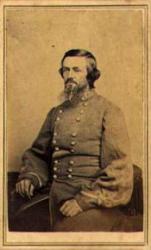
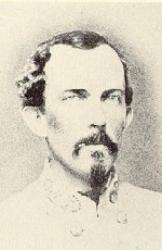
Erl Van Dorn
 USA
USABiography of Earl Van Dorn
Earl "Buck" Van Dorn was born on September 20, 1820, in Port Gibson, Mississippi. In his youth, he displayed a strong desire to serve in the military and wrote a letter to his distant relative, President Andrew Jackson, expressing his wish. With the help of President Jackson, Van Dorn was admitted to West Point Military Academy.
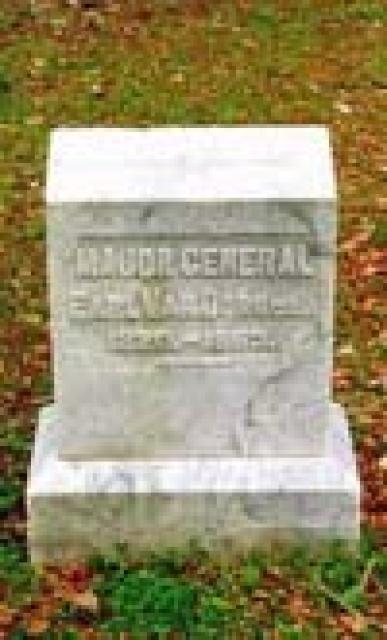
During his time at the academy, Van Dorn faced disciplinary actions for his disobedience. However, he showed talent and knowledge in cavalry tactics, field tactics, and drafting. In 1842, he graduated from West Point, ranking 52nd out of 56 cadets in his class.
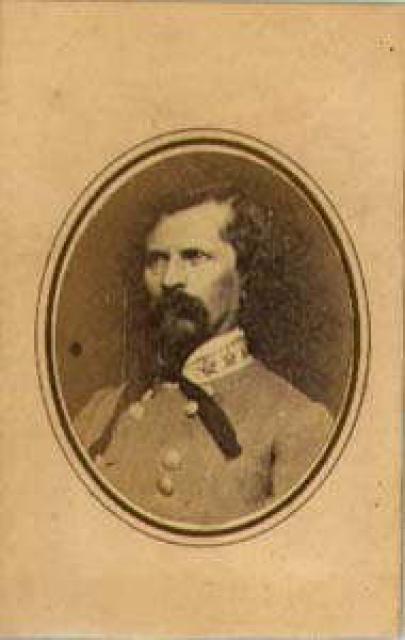
A year later, Van Dorn married Caroline Godbold, the daughter of a respected Alabama planter. They had a son and a daughter together. During the Mexican-American War, Van Dorn displayed acts of bravery and heroism, including rescuing the regimental flag under heavy fire and being the first to climb the walls of the besieged Chapultepec. He was promoted to the rank of first lieutenant for his accomplishments.
Returning from the war, Van Dorn stated, "I can never be happy outside of the army. I have no other home, and I cannot have one." In the 1850s, Van Dorn served as a captain in the 2nd Cavalry Regiment in Texas, where Colonel Albert Sidney Johnston and Lieutenant Colonel Robert Edward Lee were also stationed.
In 1858, Van Dorn was wounded three times during a bold attack on a Comanche camp. These wounds played a role in his promotion to major. He enjoyed his military career and believed it would lead him to becoming a general. However, the outbreak of the Civil War interrupted his aspirations.
As a supporter of the Confederacy, Van Dorn resigned from the U.S. Army and joined the Confederate Army in Mississippi. Many considered him the embodiment of the classic southern cavalier. With his handsome appearance, artistic talents, and romantic nature, he was regarded as the most refined cavalryman of the old American army.
President Jefferson Davis promoted Van Dorn to colonel and sent him to Texas, where he captured three federal ships, earning him the rank of brigadier general. In August 1861, he was transferred to Virginia as a major general. Van Dorn quickly gained recognition when he was appointed as the commander of the 2nd Department of the Trans-Mississippi Military District.
When General Albert S. Johnston called upon Van Dorn to join the Army of Tennessee in Corinth and effectively prevent Union offensive operations, Van Dorn decided to defend Arkansas against the sudden invasion of Union troops led by Brigadier General Samuel Curtis. However, the Confederate forces, despite their numerical advantage, suffered heavy losses due to poor tactical decisions, communication issues, and lack of coordination between Van Dorn and General Sterling Price.
During the battle, Van Dorn suffered from a severe bout of fever, which he contracted after capsizing in icy water. Before recovering from the defeat, he received orders to move to Corinth but arrived too late to participate in the Battle of Shiloh.
In June, Van Dorn left the Army of the West and hurriedly went to defend Vicksburg to ease the bitterness of recent embarrassments. However, his attempt to capture the federal stronghold at Baton Rouge failed. Despite these setbacks, President Davis still believed in Van Dorn's military talents and sent him back to Mississippi to command the Army of the West alongside General Price.
In October, Van Dorn launched an ill-fated attack on the positions of his West Point classmate, Major General William S. Rosecrans, in Corinth. The frontal assault on the Union fortifications, which Van Dorn himself had constructed, resulted in a catastrophic and costly defeat. He was accused of criminal negligence. Although he was cleared of the charges, Van Dorn lost his independent command and came under the command of Lieutenant General John C. Pemberton, leading the cavalry in Vicksburg.
Van Dorn's aggressive and sometimes reckless nature suited him well for service in the cavalry. Finally, he found his place in the war, and his raid on Grant's rear at Holly Springs, Mississippi, elevated him to the ranks of famous Confederate cavalry leaders such as Forrest, Morgan, and Wheeler. This raid forced Grant to postpone his campaign to capture Vicksburg.
After this victory, Van Dorn was given command of a cavalry corps and undertook successful operations in central Tennessee. His brilliant victory over the Yankees at Thompson's Station on March 5, 1863, further confirmed his military prowess. However, in late April, a serious quarrel erupted between Van Dorn and his subordinate, Nathan Bedford Forrest. The conflict nearly escalated into a duel, but it was ultimately resolved by their comrades.
During a lull in the fighting, Van Dorn returned to his headquarters in Spring Hill, Tennessee. His reputation as a ladies' man preceded him, and many women in the town sought his company, especially one named Jesse Helen McKissack Peters, the young wife of Dr. George B. Peters. Her passionate affair with Van Dorn led to his eviction from the respectable home he had been residing in. The jealous husband, Dr. Peters, shot and killed Major General Earl Van Dorn on May 7, 1863.
In the aftermath of his death, General Liddell, Van Dorn's comrade, expressed the general sentiment of the army, stating that "all are filled with condemnation, almost unmingled with pity for the man whose violation of social ethics led to so dishonorable an end."