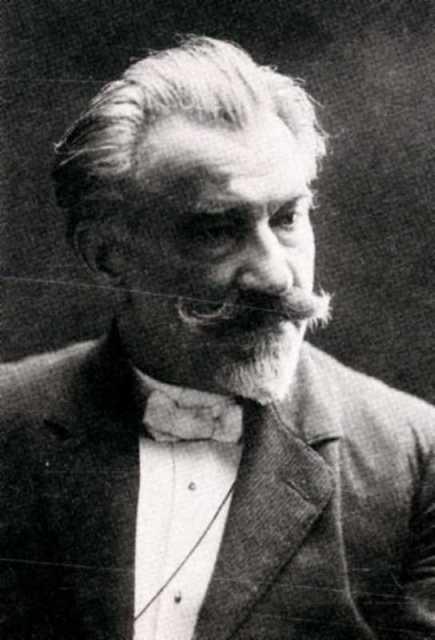
Ernests Vigners
 Latvia
- Ernst Wichner: Latvian Composer and Choral Conductor
- Teaching and Choral Involvement
- Moscow and Beyond
- Post-Independence Contributions
- Legacy and Recognition
Ernst Wichner: Latvian Composer and Choral Conductor
Early Life and EducationBorn into a musical family, Ernst Wichner began his musical journey by collecting Latvian folk songs from a young age. He attended grammar school and a teachers' seminar in Irlava and pursued higher education at the Moscow Conservatory. In 1879, he graduated as a oboist and organist, having also studied composition under the tutelage of Pyotr Tchaikovsky and Sergei Taneyev.
Teaching and Choral Involvement
After graduating, Wichner taught in Moscow, Vilnius, and Riga. He played a pivotal role in organizing the Latvian Song Festivals, serving as the principal conductor of the Third (1888) and Fourth (1895) festivals. These events showcased Latvian musical traditions and fostered a sense of national unity.
Moscow and Beyond
In 1896, Wichner relocated to Moscow, where he remained until 1920. During this time, he continued his musical endeavors and made significant contributions to the Russian musical landscape. In 1920, he returned to his newly independent homeland, Latvia.
Post-Independence Contributions
Upon his return to Latvia, Wichner established the Phonological Institute in Riga, a research center dedicated to the study and preservation of Latvian folk music. He received the Order of the Three Stars, Third Class, in recognition of his achievements.
Legacy and Recognition
Ernst Wichner's name continues to be celebrated in Latvia. The music school in Kuldiga bears his name, honoring his exceptional talent and pioneering spirit. His musical compositions and contributions to Latvian choral music have left an enduring legacy that enriches the nation's cultural heritage.



