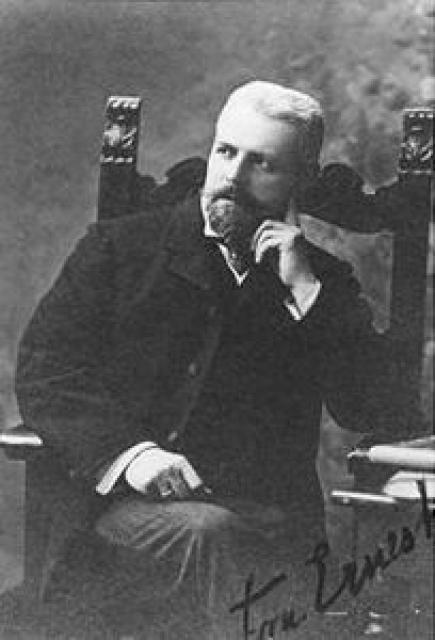
Ernst Eberhard von Ihne
 Germany
- Ernst von Ihne: German Architect and Court Architect to Emperors
- Partnership and Architectural Style
- Court Architect and Prestigious Commissions
- Hotel Palace Kronberg im Taunus
- Late Architectural Period
- Gutshaus Friedrichsfelde
Ernst von Ihne: German Architect and Court Architect to Emperors
Early Life and EducationErnst von Ihne was born in Berlin, the son of historian Wilhelm Ihne. He studied architecture at the Karlsruhe Institute of Technology, the Berlin Academy of Architecture, and the École des Beaux-Arts in Paris.
Partnership and Architectural Style
In 1877, Ihne and his partner Paul Stegmann opened the "Bureau of Architecture and Artistic Crafts" in Berlin. They specialized in eclectic designs, blending German Renaissance with French influences. Ihne's early works in Berlin were predominantly in the Neo-Baroque style.
Court Architect and Prestigious Commissions
Ihne became court architect to Emperor Frederick III in 1888. This appointment led to prestigious commissions, including:
Hotel Palace Kronberg im Taunus
Royal Library on Unter den Linden (now State Library)Kaiser Friedrich Museum (now Bode Museum)
Kaiser Wilhelm Society institutes in Dahlem (now buildings of Freie Universität Berlin)
Late Architectural Period
After 1900, Ihne's work shifted towards the English country style. He designed numerous villas, mansions, and palaces, including:
Gutshaus Friedrichsfelde
Schloss LangenburgVilla Beckerath in Potsdam
Honors and Legacy
Emperor William II bestowed the title of nobility and the rank of privy councilor upon Ihne in 1906. Ihne's eclectic architectural style left a lasting impact on Berlin and beyond. He is considered one of the leading representatives of German eclecticism.


