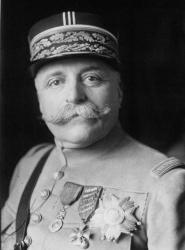
Erwin Jaenecke
 Germany
- Ernst-Anton von Kleist
- Interwar Period
- World War II
- Post-Stalingrad
- Post-War and Death
- Decorations and Awards
Ernst-Anton von Kleist
Early Life and Military CareerErnst-Anton von Kleist was born into a military family in 1881. He joined the 10th (Hanoverian) Engineer Battalion in 1911 and rose through the ranks, becoming a Lieutenant in 1912. During World War I, he served as a company commander, adjutant, and ordinance officer, earning the Iron Cross 2nd and 1st Class.
Interwar Period
After the war, Kleist remained in the German Army, serving in various engineering roles. In 1936, he participated in the Spanish Civil War as Chief of Staff of Legion Condor. He later became Chief of Staff of the Fortress Inspectorate, attaining the rank of Colonel.
World War II
At the outbreak of World War II, Kleist was assigned as Quartermaster General of the 8th Army, participating in the Polish and French campaigns. From 1940 to 1942, he served as Quartermaster General of the Wehrmacht Command in Belgium and Northern France, and was also included in the Wehrmacht High Command in the West.
In 1942, he commanded the 389th Infantry Division, participating in the Battle of Kharkov and the subsequent advance on Stalingrad. He was awarded the Knight's Cross of the Iron Cross. In September 1942, he was appointed Commander of the 4th Army Corps, which he led during the siege of Stalingrad. After the Soviet encirclement, Kleist advocated for a breakout attempt. He was wounded in January 1943 and evacuated from the Stalingrad pocket.
Post-Stalingrad
From 1943 onward, Kleist commanded the 82nd and 17th Field Armies in France and Crimea. In 1944, he was relieved of command and placed in reserve. Following the destruction of the 17th Army, he was ordered to military court-martial but never faced trial. In 1945, he sent a letter to Hitler outlining Germany's disastrous situation, which led to his dismissal from the Wehrmacht.
Post-War and Death
After the war, Kleist was arrested by Soviet forces and sentenced to 25 years in prison. He was transferred to West Germany in 1955 and released. He lived in Cologne until his death in 1960.
Decorations and Awards
Kleist received numerous decorations, including the Knight's Cross of the Iron Cross, the German Cross in Gold, and the Romanian Order of Michael the Brave.