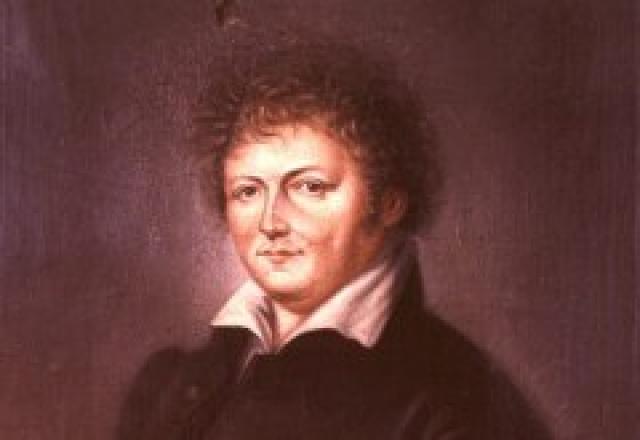
Esaias Tegner
 Sweden
Biography of Esaias Tegnér
Esaias Tegnér, a Swedish poet, was born on November 13, 1782, in Churkerude, Sweden, into a pastor's family. After graduating from Lund University in 1802, he became a lecturer in aesthetics and later a professor of Greek language at the same institution. In 1818, Esaias Tegnér became a member of the Swedish Academy. He spent the last twenty years of his life as a bishop in Vexjo. His early poems were written in the classical style. The publication of his youthful poems "The Battle Song of the Skåne Volunteer Corps" in 1808 and "Sweden" in 1811 brought him universal recognition. These poems were inspired by the events of the Russo-Swedish war. In 1812, Tegnér joined the literary circle of Swedish romantics called the "Gothic Union." During this period, he also participated in the publication of the journal "Iduna," where he printed numerous poems on ancient Scandinavian mythology. In 1818, Tegnér became a member of the Swedish Academy. In the last twenty years of his life, he held the position of Bishop in Vexjo. The highest manifestations of Tegnér's poetic genius are considered to be the idyll in hexameters "First Communion" (1820), the verse novel "Axel" (1822), and the famous poem "The Saga of Frithiof" (1825), based on an ancient Icelandic legend. This poem was characterized by a wealth of poetic forms and means and became a kind of Swedish national epic.
His "Saga of Frithiof" has been translated into all European languages, and more than twenty translations into English alone have been made. In this saga, there are 24 songs, each of which is written in its own size, most accurately reflecting the content. Later, in Tegnér's worldview and creative work, partly influenced by mental illness, a crisis occurs. His poems "Melancholy," "The Dead," and "Farewell" are permeated with motifs of pessimism.


