Evaeriste Parny
 France
- Biography of Evariste Parny
- Early Life and Love
- Early Success as a Poet
- Indian Influence and Erotic Poetry
- Later Works and Controversy
- Later Years and Legacy
- Evariste Parny passed away on December 5, 1814, in Paris.
Biography of Evariste Parny
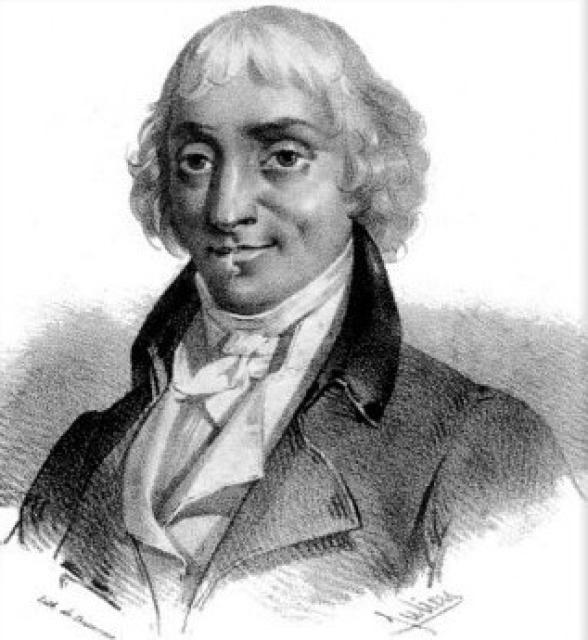
Evariste Parny, whose full name is Evariste Desire de Forges, vicomte de Parny, was born in 1753 on the Isle of Bourbon, now Reunion. He came from an aristocratic family and at the age of 10, Evariste and his brothers left Bourbon and went to France, where he received an education and later joined the military.
Early Life and Love
During his youth, Evariste faced a spiritual struggle as he was torn between his deep religious beliefs and the frivolous lifestyle he encountered in France. In 1773, he returned to Bourbon to visit his family and fell deeply in love with a woman named Esther Lelievre. However, his father strongly opposed their marriage and forbade Evariste from pursuing it. Heartbroken, Evariste returned to Paris in 1775, only to discover that Esther had married another man.
Early Success as a Poet
Evariste's unrequited love for Esther inspired his first collection of poems, 'Les Poésies érotiques' ('Erotic Poems'), which was published in 1778. The collection became incredibly popular and brought him recognition and fame as a poet. He followed this success with another collection titled 'Opuscules poétiques' ('Poetic Trifles'), which further solidified his reputation as one of the most promising French poets of his time.
Indian Influence and Erotic Poetry
In 1785, Evariste left Bourbon and traveled to Pondicherry in India, where he served as an assistant to the Governor-General of French colonies in India. Although he was not particularly happy in India, Evariste gathered material for his book 'Chansons Madécasses', which was published in 1787. As his career progressed, Evariste began writing more explicitly erotic works, such as 'Les amours des reines de France' ('The Loves of the Queens of France'), which he later destroyed. His poetry often showed the influence of Voltaire, and he occasionally imitated his style.
Later Works and Controversy
In 1799, Evariste published a major anti-religious erotic poem titled 'La guerre des dieux anciens et modernes' ('The War of the Ancient and Modern Gods'), which went through three editions in a year. He continued to write erotic poetry, including 'Le voyage de Céline' ('The Journey of Celine'), 'Le paradis perdu' ('Paradise Lost'), and 'Les galanteries de la Bible' ('The Amorous Tales of the Bible'). Some of his works were banned and his manuscript for 'La Christianide' ('The Christianida') was purchased by the Restoration government only to be burned.
Later Years and Legacy
In his later years, Evariste's poetry shifted towards religious and political burlesque. However, his anti-religious verses did not gain him favor with the church. While Evariste's poetry may not have been considered significant in the broader context of French literature, it reflected the period preceding the French Revolution. Interestingly, his poetry had a strong influence on Russian poets, particularly Alexander Pushkin, who translated many of his works and attempted to imitate his style.
During the French Revolution, Evariste, who did not receive any pension from the king, was not particularly involved in politics. He worked in the Ministry of Interior for almost three years due to financial difficulties and later joined the administration of theater and arts. In 1802, he married Marie-Françoise Vally and was accepted into the French Academy the following year. Emperor Napoleon I granted him a pension of three thousand francs per year in 1813, but the payments ceased after the restoration of the monarchy in 1814.