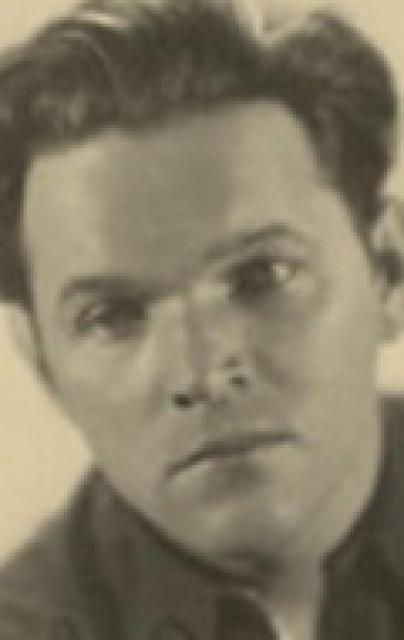
Fayt Harlan
 Germany
Biography of Veit Harlan
Veit Harlan was a German actor, theater director, and filmmaker. He was born on September 22, 1899, in Berlin, into a family of writer and playwright Walter Harlan (1867-1931). During his time in high school, Harlan began working as an extra on the stage of the German Theater. He attended the acting seminar of Max Reinhardt and in 1915, he got his first small roles and worked as an assistant to film director Max Mack. In late 1916, he volunteered for the Western Front and served in France. In 1919, he became a volunteer actor at the Volksbühne in Berlin. In 1922, he married actress Dore Gerson and worked as an actor in the provinces. In 1924, he joined the ensemble of the Prussian State Theater in Berlin and became a member of the Social Democratic Party of Germany (SDPG). In 1926, he made his film debut. He married actress Hilde Körber in 1929, and they had three children together, including film director Thomas Harlan (born in 1929), actress Maria Körber (born in 1930), and Susanna Körber.
Career as a Filmmaker
In 1934, Harlan became the director of the Theater am Schiffbauerdamm. He made his directorial debut in film in 1935. In 1937, he directed the controversial film "The Master," a loose adaptation of Gerhart Hauptmann's play "Before Sunset," with Emil Jannings in the lead role. This film, which expressed the "principle of the Führer" in its plot, established Harlan as a leading director of the Third Reich. In 1940, he released "The Jew Süss," described by Joseph Goebbels as an "antisemitic film that we can only wish for" in his diary entry on August 18, 1940. In 1942, he directed "The Great King," the most expensive German production at that time, with 15,000 extras. On March 4, 1943, Harlan was awarded the title of professor. During his career, he directed four out of the nine full-length color films made in Germany before 1945 using the Agfacolor system: "The Golden City" (1942), "Immensee" (1943), "Opfergang" (1944), and "Kolberg" (1945). The filming of the propaganda film "Kolberg" involved the participation of Wehrmacht troops and the Russian Liberation Army of General Vlasov. This "total film" about "total war" was the most expensive German film production until recently. At the end of World War II, Harlan was in Hamburg. In 1947-1948, he anonymously directed productions in which his wife, Kristina Söderbaum, acted. His application for denazification was left without consideration. Harlan was accused of "crimes against humanity" as the director of the film "The Jew Süss." However, he was acquitted in two trials - in March-April 1949 in Hamburg and in March-April 1950 in Berlin.
Later Life and Legacy
The premiere of his first post-war film, "Immortal Beloved," led to protests in many cities in West Germany. Veit Harlan converted to Catholicism two months before his death and passed away on April 13, 1964, in Capri.
Filmography:
- 1936: "Scandal in the Barracks"
- 1936: "The Weary Theodore"
- 1936: "Miss Veronika"
- 1936: "Maria, the Maid"
- 1937: "Kreutzer Sonata"
- 1937: "The Master"
- 1937: "My Son, the Minister"
- 1938: "Youth"
- 1938: "Vanished Traces"
- 1939: "Immortal Heart"
- 1939: "Journey to Tilsit"
- 1940: "The Jew Süss"
- 1941: "Pedro Must Hang"
- 1942: "The Great King"
- 1942: "The Golden City"
- 1943: "Immensee"
- 1944: "Opfergang"
- 1945: "Kolberg"
- 1951: "Immortal Beloved"
- 1951: "Hanna Amon"
- 1953: "The Blue Hour"
- 1954: "Stars Over Colombo"
- 1954: "The Prisoner of the Maharaja"
- 1955: "Betrayal of Germany (The Dr. Sorge Case)"
- 1957: "Different from You and Me"
- 1958: "It Was the First Love"
- 1958: "Love Can Be Like Poison"
- 1958: "I Will Carry You on My Hands"
- 1962: "The Blonde Woman of the Maharaja"


