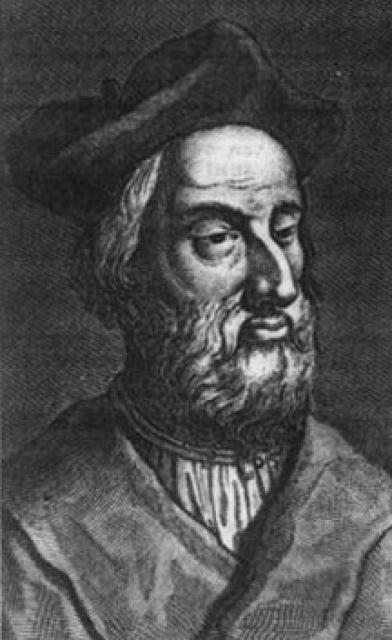
Francesco Berni
 Italy
Italy- Francesco Berni: A Renaissance Poet of Satire and Burlesque
- Exile and Patronage
- Literary Works
- Satirical Sonnets and Parodies:
- "Letters" and "Dialogo contro i poeti":
- Capitoli: Burlesque Poetry
- Legacy
Francesco Berni: A Renaissance Poet of Satire and Burlesque
Early Life and CareerFrancesco Berni, a renowned Italian poet of the sixteenth century, was born in Lamporecchio, near Pistoia, as the son of a notary. He spent his youth in Florence before moving to Rome in 1517 to pursue a career in the Vatican. Berni first served under his distant relative, Cardinal Bibbiena, and later under his nephew, Angelo Dovizi.
Exile and Patronage
In 1522, Berni's sharp wit earned him the ire of the newly elected Pope Adrian VI, forcing the poet to flee Rome. He returned during the reign of Clement VII (1523) and found patronage under Cardinal Giovanni Matteo Giberti. After the Sack of Rome in 1527, Berni sought refuge in the Veneto region and witnessed the coronation of Charles V in Bologna in 1530. From 1532 onwards, he entered the service of Ippolito Medici until he was poisoned for refusing to participate in a plot against his patron.
Literary Works
Comedies and Epics:Berni's first major work, "La Catrina," a comedy written in dialect, was inspired by Luigi Pulci and Lorenzo de' Medici. He is also known for his reworking of Matteo Boiardo's epic poem "Orlando innamorato," which he infused with personal, autobiographical touches.
Satirical Sonnets and Parodies:
Berni's sharp satire targeted the papal court and the conventions of Petrarchan poetry. His parodic sonnets humorously subverted the elevated language and themes of the Petrarchists.
"Letters" and "Dialogo contro i poeti":
Berni's "Letters" were published posthumously in 1885. In his "Dialogo contro i poeti," an anonymous work published in 1526, he criticized the Humanist view of the poet as a divinely inspired madman and advocated for a reform of the Church and Christian morals.
Capitoli: Burlesque Poetry
Berni's unique contribution to Renaissance literature was his collection of "capitoli," satirical and often obscene poems written in terza rima. These works parodied traditional poetic forms and employed vulgar language to mock the vanity and hypocrisy of his contemporaries.
Legacy
Francesco Berni's poetic style, characterized by a mock-heroic treatment of trivial subjects, came to be known as "Bernesque." His work significantly influenced later Italian poets such as Anton Francesco Grazzini, Giovanni Della Casa, and Cesare Caporali, and his use of irony and humor continues to resonate with readers today.