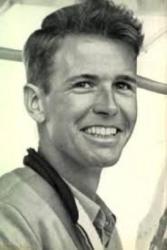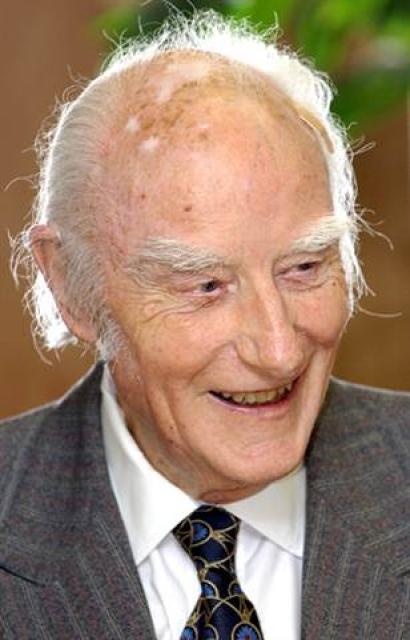
Francis Crick
 Great Britain
Biography of Francis Crick
Francis Harry Compton Crick, an English molecular biologist, biophysicist, and neuroscientist, is best known for his discovery of the structure of the DNA molecule alongside James Watson in 1953. Along with Maurice Wilkins, they were awarded the Nobel Prize in Physiology or Medicine in 1962 for their discoveries related to the molecular structure of nucleic acids and their significance in the transmission of genetic information in living matter.
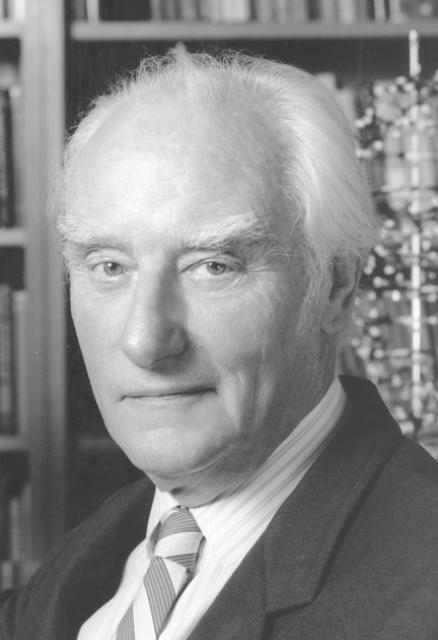
Early Life
Francis Harry Compton Crick, the first child of Harry Crick and Annie Elizabeth Wilkins, was born on June 8, 1916, in a small settlement near Northamptonshire, England. His grandfather, amateur naturalist Walter Drawbridge Crick, conducted research on local foraminifera and corresponded with Charles Darwin. In honor of his grandfather, two representatives of the class Gastropoda were even named after him.
At an early age, Francis became interested in science and actively sought knowledge through books. His parents took him to church, but around the age of 12, he declared that he was rejecting religious faith in favor of seeking answers to his questions from a scientific perspective. Later, he ironically stated that adults could discuss the questions of Christianity as much as they wanted, but children should be kept away from all of that.
Education and Career
At the age of 21, Crick earned a Bachelor's degree in physics from University College London. During World War II, he joined the Admiralty's Research Laboratory, where he worked on magnetic and acoustic mines and played a significant role in the development of a new mine that proved effective against German minesweepers.
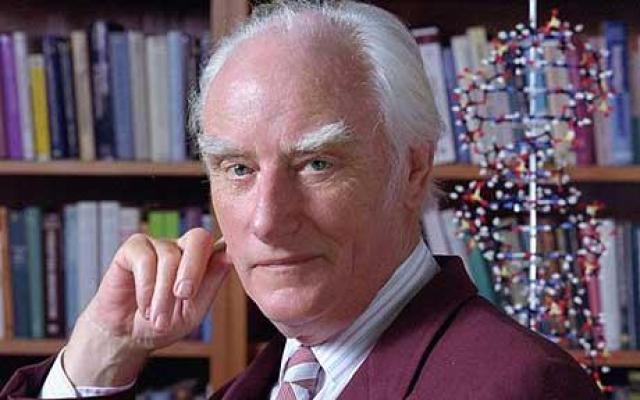
In 1947, Crick began studying biology, joining the wave of "migrant scientists" who left their physics research in favor of biology. He had to switch from the "elegance and profound simplicity" of physics to the "complex chemical processes that evolved as a result of natural selection over billions of years." Emphasizing the seriousness of the transition from one field to another, Crick stated that he was "practically born again."
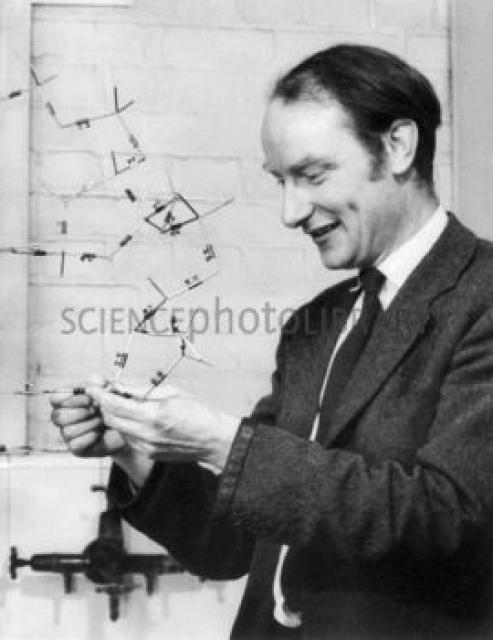
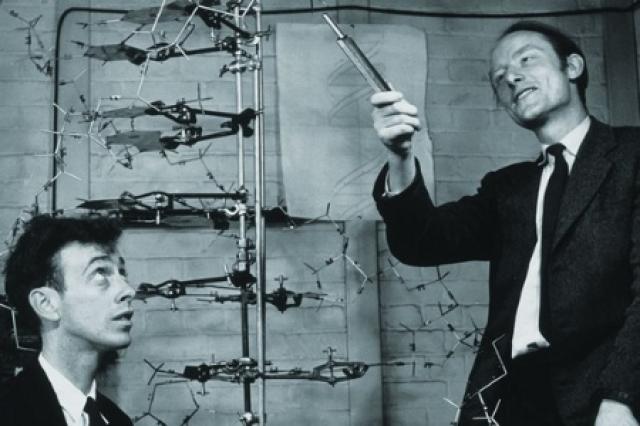
For most of the following two years, Francis focused on studying the physical properties of the cytoplasm at the Strangeways Laboratory in Cambridge, led by Honor Bridget Fell, until he began collaborating with Max Perutz and John Kendrew at the Cavendish Laboratory. In late 1951, Crick teamed up with James Watson, and together they published the jointly developed model for the spiral structure of DNA in 1953. Maurice Wilkins, who showed Francis and James an X-ray image of the DNA molecule taken by his colleague Rosalind Franklin, was also involved in the discovery. With this image, the scientists were able to explain the mechanisms of DNA replication.
Later Career and Contributions
In molecular biology, Crick introduced the term "Central Dogma," summarizing the rule of genetic information flow (DNA → RNA → protein). For the remainder of his career, Crick held a position as a professor at the Salk Institute for Biological Studies in La Jolla, California. His responsibilities were solely focused on scientific research. His later studies were concentrated on theoretical neurobiology and his desire to advance the understanding of human consciousness.
Francis Crick was married twice and had three children and six grandchildren. He passed away on July 28, 2004, from colon cancer. He held a particularly critical view of Christianity and once stated, "I do not respect Christian beliefs. I think they are just ridiculous. If we could get rid of them, we would be much better off tackling the real problem of working out what we are and what our place in the world is."