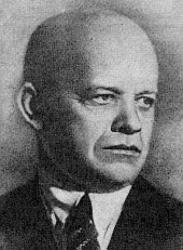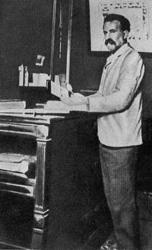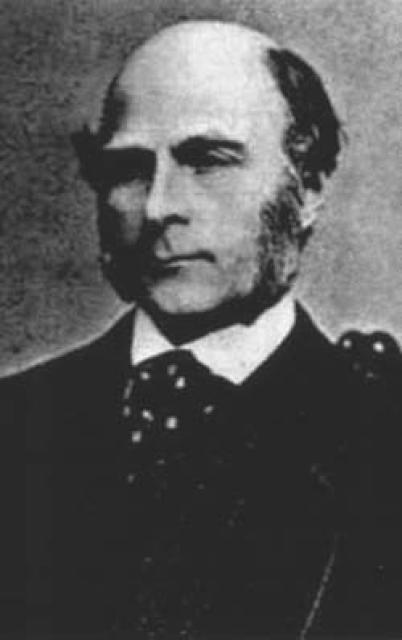
Francis Galton
 Great Britain
- Early Life and Education
- Explorations and Anthropometric Studies
- The Influence of Darwin and Hereditary Genius
- Measuring Human Abilities
- Eugenics and Social Reform
- Legacy and Impact
Early Life and Education
Francis Galton was born on February 16, 1822, in a town near Birmingham, England. His cousin was Charles Darwin, and his grandfather was Erasmus Darwin. Galton received a medical and biological education, intending to become a physician. However, upon inheriting a considerable fortune after his father's death, he decided to pursue scientific exploration and travel.
Explorations and Anthropometric Studies
Galton embarked on numerous expeditions to study primitive cultures worldwide. His most notable research was in southwestern Africa (1850-1852), for which he received a gold medal from the Royal Geographical Society in 1853. Galton also made significant contributions to meteorology, creating weather maps and using statistical methods to analyze them, leading to the discovery and explanation of anticyclones. His anthropological research had applications in forensic science, such as fingerprinting and photo identification, and laid the foundation for biometrics.
The Influence of Darwin and Hereditary Genius
The publication of Darwin's "On the Origin of Species" (1859) had a profound impact on Galton's scientific endeavors. He introduced the concept of heredity into psychology and anthropology to explain individual variations among humans. Galton analyzed biographies of eminent individuals, discovering that high intellectual abilities had a strong hereditary component. He also emphasized the influence of environmental factors on the expression of these abilities. These studies culminated in his book "Hereditary Genius" (1869), which founded differential psychology.
Measuring Human Abilities
Galton invented instruments, such as an ultrasonic whistle, to measure psychophysical differences. He developed methods for assessing abilities, which became the basis for modern testing systems. Additionally, he introduced statistical methods to analyze data, including the calculation of correlations. In his work "Inquiries into Human Faculty" (1883), Galton coined the term "eugenics," referring to the study of human heredity, health, and means of improving the human race through the control of inherited traits.
Eugenics and Social Reform
In his later years, Galton's primary focus became eugenics. He founded the Galton Laboratory at University College London and established the Francis Galton Scholarship for research in eugenics. In 1908, the Eugenics Education Society (now the Eugenics Society) was founded in London, with Galton as its first honorary president. Galton's eugenical views influenced the creation of a utopian societal model.
Legacy and Impact
From 1849 to 1910, Galton published over 200 articles and lectures on a wide range of topics. In 1909, he was knighted for his contributions. Galton died on January 17, 1911, in Haslemere, Surrey. His work played a significant role in psychology, anthropology, and the development of statistical methods. The concept of eugenics, although later discredited, sparked debates about the nature of human inheritance and social reform.