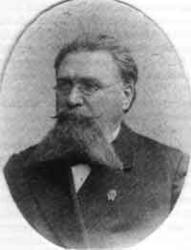
Francis Hutcheson
 Ireland
- Biography of Francis Hutcheson
- Contributions to Scottish Enlightenment
- Ethical Philosophy
- Influence and Works
- Legacy
Biography of Francis Hutcheson
Francis Hutcheson was a Scottish-Irish educator and philosopher, born on August 8, 1694 in Drumalig, Northern Ireland, to a Presbyterian elder. He received his education at the University of Glasgow from 1710 to 1716. From 1719 to 1729, he taught at a private academy he established in Dublin. In 1729, Hutcheson took the chair of moral philosophy at the University of Glasgow, where he taught until his death.
Contributions to Scottish Enlightenment
During this later period, focused mainly on lecturing at the university, Hutcheson sparked a lively interest in philosophy among Scottish students, earning him the title of the initiator of the "Scottish Enlightenment." Although Hutcheson was one of the first philosophers of the Enlightenment to write about aesthetics (he introduced the concept of the "internal sense" - the ability to directly sense beauty and harmony), he is best known for his ethical writings.
Ethical Philosophy
According to Hutcheson, human beings are naturally inclined towards moral actions; virtue consists of promoting the well-being of others. The motivation for performing virtuous acts lies in their beauty, rather than the benefits derived from them. With an innate moral sense, individuals are capable of judging their own and others' virtue or vice. As a representative of the moral sense school, Hutcheson was closely associated with the ideas of Shaftesbury and J. Butler. He differed from Butler in that he did not consider self-love inherently virtuous.
Influence and Works
Hutcheson's views gained popularity in Great Britain, France, and Germany. He anticipated the utilitarian teachings by formulating the famous principle of "the greatest happiness for the greatest number of people" in 1725. This nearly led to his persecution by the Scottish Presbyterian Church, as he was accused of promoting "false and dangerous teachings" about moral righteousness being based on promoting the happiness of others. Hutcheson's influence extended to his student Adam Smith and had an impact on David Hume, Thomas Reid, Thomas Brown, Thomas Jefferson, and John Adams. Among his most important works are "An Inquiry into the Original of our Ideas of Beauty and Virtue" (1725), "Essay on the Nature and Conduct of the Passions and Affections with Illustrations upon the Moral Sense" (1728), and "System of Moral Philosophy" (published posthumously in 1755).
Legacy
Francis Hutcheson passed away in Glasgow in 1746, leaving behind a profound impact on moral philosophy and the Scottish Enlightenment. His emphasis on the beauty and moral sense of actions contributed to the development of ethical theories and influenced subsequent generations of philosophers.