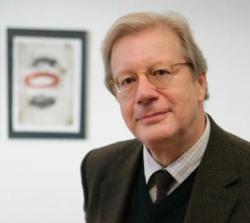
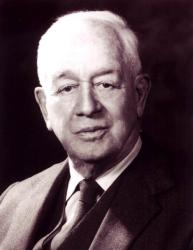
Howard Martin Temin
 USA
USA- Biography of Howard Martin Temin
- Early Life and Education
- Research and Discoveries
- Later Life and Achievements
Biography of Howard Martin Temin
Howard Martin Temin was an American geneticist and virologist, born in Philadelphia. He was the second of three sons of Henry Temin, a judge, and Annette (Lehman) Temin, who was actively involved in public activities.
Early Life and Education
Temin attended high school in Philadelphia and spent several summers at the Jackson Laboratory in Bar Harbor, Maine, where he studied as part of a program for gifted children. This deepened his interest in biological research and allowed him to gain practical skills in conducting laboratory experiments.
In 1951, Temin enrolled at Swarthmore College, where he studied biology through a special program. In the summer of 1953, he worked at the Cancer Research Institute in Philadelphia. After receiving his Bachelor of Science degree in biology in 1955, he returned to the Jackson Laboratory, where he met David Baltimore, who was a high school student at the time. This acquaintance led Temin to transfer to the California Institute of Technology in Pasadena, where he continued his work in experimental embryology. However, after a year and a half, he switched to animal virology in Renato Dulbecco's laboratory.
Research and Discoveries
As part of his doctoral dissertation, which focused on the Rous sarcoma virus, discovered by Peyton Rous in sarcomas of Plymouth Rock chickens, Temin, along with Harry Rubin, developed a quantitative method for determining virus growth. In 1959, after earning his Ph.D., Temin conducted further research on the Rous sarcoma virus at the California Institute of Technology. His research suggested that some viruses alter the genetic information encoded in the cells they attack.
The following year, Temin was appointed Assistant Professor of Oncology at the University of Wisconsin, where he worked in the laboratory of the McArdle Medical School. Using the quantitative method he developed while studying the Rous sarcoma virus, Temin began to identify differences between normal and tumor cells, developing his early hypothesis that included other RNA-containing animal viruses. According to this hypothesis, known as the provirus hypothesis, the protein coat of some viruses contains an enzyme that catalyzes or facilitates the copying of viral genes into the host cell's deoxyribonucleic acid (DNA).
However, proving the provirus hypothesis depended on demonstrating the existence of such an enzyme. Furthermore, many scientists were hostile to the hypothesis because it contradicted the widely accepted idea that genetic information could only be transmitted from DNA to RNA and proteins, and not in the reverse direction. Despite this theoretical opposition, Temin accumulated experimental evidence in support of the provirus theory.
In 1970, he and David Baltimore, who also joined the work at the California Institute of Technology, independently isolated the enzyme that copies viral RNA genes into cellular DNA. They named it RNA-directed DNA polymerase and published their results in June 1970 in the scientific journal "Nature." This enzyme is now known as reverse transcriptase because, unlike earlier genetic theories, it transcribes (copies) genetic information from RNA to DNA. Viruses possessing reverse transcriptase activity and existing as proviruses in animal cells are called retroviruses. They cause various diseases, including HIV/AIDS, certain forms of cancer, and hepatitis.
Temin also investigated the potential transformation of normal cells into tumor cells under the influence of genetic information from proviruses. He demonstrated that the activation of a provirus gene could induce the synthesis of certain tumor-producing proteins in the cell. These pathological proteins then blocked the transmission of signals that limit cell growth, allowing transformed cells to grow uncontrolled.
Later Life and Achievements
One year after the publication of his virus research results, Temin became a professor in the Graduate Research Scholars Society at the University of Wisconsin. He shared the Nobel Prize in Physiology or Medicine in 1975 with Baltimore and Dulbecco "for their discoveries concerning interactions between tumor viruses and the genetic material of the cell."
Following his Nobel Prize win, Temin continued his work at the McArdle Laboratory for Cancer Research at the University of Wisconsin. In 1980, he was elected Professor of Oncology, and in 1982, he became a Professor of Biology. He served on the editorial boards of virology, cellular physiology, and "Proceedings of the National Academy of Sciences." Temin authored or co-authored over 170 articles and several books.
Temin married Reba Greenberg, who worked in the field of population genetics, in 1962, and they had two daughters. He received numerous awards throughout his career, including the Stoddard Award in Molecular Biology from the National Academy of Sciences (1972), the Award in Enzyme Chemistry from the American Chemical Society (1973), the Teaching Award from the American Association for Cancer Research (1974), the International Gardner Foundation Award (1974), the Albert Lasker Award for Basic Medical Research (1974), and the Lila Gruber Memorial Cancer Research Award from the American Academy of Dermatology (1981).
In addition to his membership in the National Academy of Sciences and Arts, Temin was a member of the American Philosophical Society, American Society for Microbiology, American Association for Cancer Research, and the American Society for Virology. He also held honorary degrees from Swarthmore College and the New York Medical College.