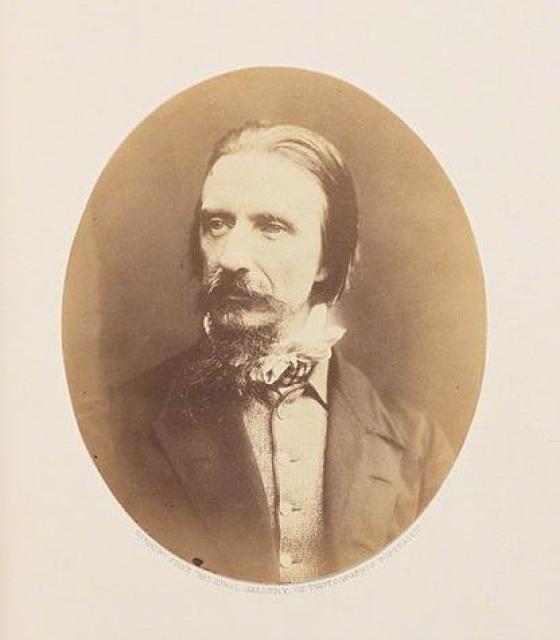
Francis William Newman
 Great Britain
- Biography of Francis William Newman
- Early Career and Missionary Period
- Academic Career and Literary Works
- Later Years and Legacy
Biography of Francis William Newman
Francis William Newman was an English scholar and versatile writer, best known as the younger brother of Cardinal Newman, who played a significant role in the religious history of 19th century England. He was born on June 27, 1805, in London, and, like his elder brother, attended Great Ealing School, a renowned school considered one of the best private schools in England during the 19th century, alongside Eton and Harrow. In 1826, he graduated with honors from Oxford, where he was regarded as a brilliant student, and the same year, he joined the fellowship of Balliol College, the breeding ground for British prime ministers.
Early Career and Missionary Period
Regarding his theological career, doubts about the ceremony of infant baptism led Newman to retire in 1830 and travel to Baghdad as an assistant in the Christian mission of Anthony Norris Groves. In 1833, he returned to England to provide additional support for the missions, but rumors about his unconventional views on eternal punishment preceded him. Faced with suspicion from his colleagues, Newman abandoned his missionary calling and started teaching classical languages at a college in Bristol. His letters home, written during the missionary period and filled with curious observations, were published in a collection in 1856.
Academic Career and Literary Works
In 1840, Newman became a Latin professor at Manchester New College, a well-known Unitarian seminary in York that preceded Manchester College, Oxford. In 1846, he left this position to become a professor at University College, London, where he taught until 1869. Throughout this period, he conducted research in mathematics and Eastern languages but wrote little until 1847 when he anonymously published "The History of the Hebrew Monarchy." In 1849, his book "The Soul, her Sorrows and Aspirations" was published, analyzing the relationship between the human soul and the Creator. In 1850, he published "Phases of Faith, or Passages from the History of my Creed," a religious autobiography detailing his transition from Calvinism to pure theism.
Newman gained recognition as the author of these two serious works, free from the eccentricity found in his other writings, except for his studies in mathematics and Eastern philology. His works covered a wide range of topics, including logic, political economy, English reforms, Austrian politics, Roman history, diet, grammar, complex branches of mathematics, the Arabic language, and the correction of Greek texts and other rare languages like Berber. While working on these subjects, he showed extraordinary talent, but whenever the topic allowed, his works were infused with irreparable quirkiness and eccentricity, making him a target for jokes in academic circles.
Later Years and Legacy
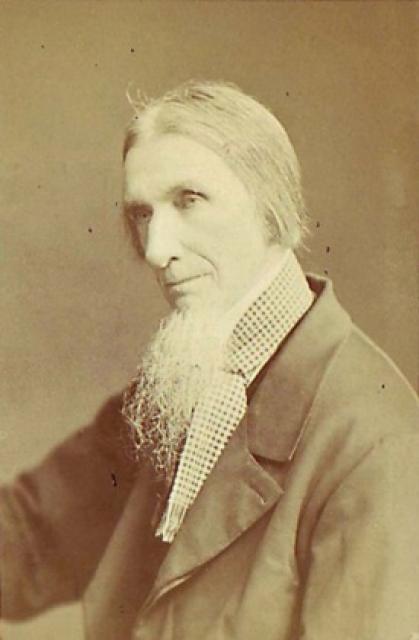
After leaving University College, Newman spent several years in London before moving to Clifton and, eventually, the seaside resort town of Weston-super-Mare, where he passed away on October 7, 1897, in old age. He had been blind for five years before his death but retained his sharp intellect until the end. Newman was married twice. His final publication, "Contributions chiefly to the Early History of Cardinal Newman" (1891), is often criticized for its apparent lack of fraternal sentiments and the absence of the subtle reasoning for which Cardinal Newman was renowned. Those who knew him closely described Francis William Newman as a brilliant man with a fervent enthusiasm but, unfortunately, lacking a sense of humor.




