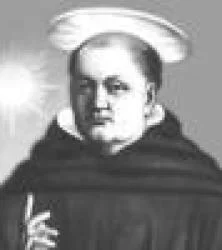
Marcellus II
- A scholar raised for public service
- The Council of Trent and the Vatican Library
- A short and purposeful papacy
- A legacy beyond three weeks
Marcello Cervini became Pope Marcellus II on 9 April 1555, carrying the hopes of church reformers into a pontificate that lasted only 22 days. A scholar, diplomat, and cardinal librarian before his election, he entered the papacy with a reputation for discipline and learning. His brief tenure left little time for grand plans, but his careful stewardship of the Vatican Library and work at the Council of Trent had already shaped Catholic life in an era of religious upheaval.
A scholar raised for public service
Cervini was born on 6 May 1501 in Montefano, near Macerata in central Italy. His father, Ricciardo, worked in tax administration and oversaw his education. The boy studied grammar, rhetoric, philosophy, and astronomy, and was also introduced to practical subjects such as architecture, agriculture, and bookbinding. As a young man he continued his studies in Siena, focusing on Greek, mathematics, and astronomy.
A 1524 visit to Rome brought him to the attention of Pope Clement VII. Cervini helped correct a mistaken prediction of a coming flood and offered calendar calculations; the episode opened a path into papal service. He spent the following years between Rome and his family’s estates, then settled at the papal court in the 1530s. Ordained a priest in 1535, he became secretary to Cardinal Alessandro Farnese, nephew of Pope Paul III, and soon took on diplomatic and administrative work.
The Council of Trent and the Vatican Library
Cervini became a cardinal in 1539 and emerged as one of the leading figures in the Church’s response to the Protestant Reformation. In 1545, he was named one of three presidents of the Council of Trent. There he helped guide difficult debates on scripture, doctrine, and church discipline, balancing firm defense of papal authority with careful attention to argument and procedure. He favored reform of abuses in Rome and resisted efforts by Emperor Charles V to use the council for his own political ends.
His interests were not limited to politics and theology. Cervini built a circle of scholars and promoted the study and publication of classical and Christian texts. In 1548 he took charge of the Vatican Library, later becoming its cardinal librarian. Under his stewardship, the collection grew by hundreds of Latin, Greek, and Hebrew books; new catalogues were prepared, and valuable manuscripts were brought into print. He also supported the publication of an Ethiopian-language Gospel and editions of early Christian writers. The work reflected his conviction that scholarship could serve both religious renewal and the defense of Catholic tradition.
A short and purposeful papacy
After the death of Pope Julius III, the cardinals elected Cervini on 9 April 1555. In an unusual gesture, he kept his own name and became Marcellus II, signaling continuity with the work he had undertaken as a cardinal. His coronation the next day was deliberately restrained because it fell during Holy Week.
Marcellus moved quickly. He pressed for a stricter and more sober life in the papal court, refused to turn high office into a source of favors for relatives, and ordered preparations to reorganize important departments of the Roman Curia. He also called for bishops living away from their dioceses to return. Alongside administrative reform, he sought a diplomatic path toward peace in Europe and advocated practical measures to ease Rome’s food supply and finances.
The new pope’s health, however, was fragile. The demands of Holy Week and Easter worsened his condition, and he died in Rome during the night of 30 April to 1 May 1555, only three weeks after his election. His plans for reform had barely begun when his pontificate ended.
A legacy beyond three weeks
Marcellus II is often remembered through music: Giovanni Pierluigi da Palestrina’s celebrated Missa Papae Marcelli bears his name. The association has inspired a story that the Mass was performed for the pope or saved polyphonic church music from a ban. The work was composed after Marcellus’s death, however, so it could not have influenced his brief papacy in that way. Its title still captures the cultural memory attached to his name.
The lasting measure of Marcellus’s influence lies more securely in his years before the papacy. At Trent he helped steer debates at a pivotal moment, and as librarian he strengthened a major center of humanist and theological scholarship. His short reign gave reformers a glimpse of a different style of papal leadership: intellectually serious, personally restrained, and intent on correcting the Church’s institutions.