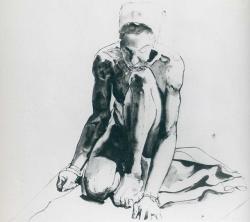
Francisco de Zurbaran
 Spain
SpainBiography of Francisco de Zurbarán
Francisco de Zurbarán (1598–1664) was a Spanish painter known for his contributions to the Baroque art movement. He was born on November 7, 1598, in Fuente-de-Cantos, in the province of Badajoz. Zurbarán studied in Seville and settled there permanently in 1628. During his time in Madrid in 1634, he became a court painter and created several compositions for the royal palace, including some battle scenes. These works were influenced by the paintings of José de Ribera.
Zurbarán's best works were created in the 1630s and 1640s. He painted three cycles of works for the church in Jerez, the monastery of Guadalupe, and the cathedral in Seville. His main contribution to the Baroque art movement was the extraordinary blend of mystical and realistic elements in his religious paintings, portraits, and still lifes. The figures of his depicted characters were carefully modeled as three-dimensional sculptures. His paintings on religious subjects reflected the silence, solitude, and contemplative detachment of 17th-century Spanish monasteries.
Zurbarán's paintings were characterized by ascetic simplicity, strict order, and original compositions, as well as the bold use of deep dark tones. Many of his works were based on skillfully reworked Flemish engravings. Most of Zurbarán's paintings can be found in Madrid, Seville, Cadiz, and Guadalupe. His art had a notable influence on Latin American art.