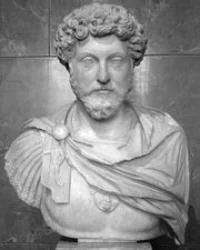
Francisco Pizarro
- From Trujillo to the Pacific
- The partnership and the route south
- Cajamarca and the capture of Atahualpa
- Power, conflict, and death
- A contested legacy
Francisco Pizarro rose from a modest and uncertain beginning in Spain to become the leader of the campaign that brought the Inca Empire under Spanish rule. His story is one of ambition, political calculation, and violence. A small force of Spanish soldiers helped overturn a vast Andean state, but it did so amid divisions within the Inca leadership and with the aid of Indigenous allies. The conquest opened Peru to Spanish colonial rule and brought devastating consequences for the people who lived there.
From Trujillo to the Pacific
Pizarro was born around 1478 in Trujillo, in Extremadura, Spain. The details of his youth are sparse, and accounts describe him as the illegitimate son of a minor nobleman. He received little formal education and sought opportunity across the Atlantic, where Spanish expeditions were expanding their reach through the Caribbean and Central America.
By about 1509 he was in the Americas. He joined the expedition of Alonso de Ojeda to the region of present-day Colombia and later became associated with Vasco Núñez de Balboa. In 1513, Pizarro was among the Spaniards who crossed the Isthmus of Panama and saw the Pacific Ocean. He later held civic and colonial offices in Panama, gaining both experience and connections.
The partnership and the route south
Reports of a wealthy kingdom farther down the Pacific coast drew Pizarro into a new venture. In 1524, he joined forces with soldier Diego de Almagro and cleric Hernando de Luque to explore the region later called Peru. Their first voyage was difficult and yielded little. A second expedition reached farther south, where they encountered evidence of the powerful Inca state.
After returning to Spain, Pizarro secured royal authority for an expedition and negotiated terms that gave him the leading position. He sailed again in 1531 with a small contingent, accompanied by several of his brothers. The empire he entered was already shaken by a succession struggle between the brothers Huáscar and Atahualpa. The civil war had weakened the ruling order, though the Inca state remained powerful and organized.
Cajamarca and the capture of Atahualpa
In November 1532, Pizarro’s force reached Cajamarca, where Atahualpa was staying after defeating Huáscar. The Spaniards invited him to meet them in the town square. The encounter ended in a sudden attack: the Spanish seized Atahualpa and killed many of the people in his entourage. Pizarro held the Inca ruler captive, turning his imprisonment into a lever over the empire.
Atahualpa offered a vast ransom of gold and silver, much of which was collected and delivered. The Spaniards took the treasure, but Pizarro’s government did not release him. After a trial in which he was accused of several offenses, Atahualpa was executed in 1533. The capture and death of the emperor did not by themselves end Inca resistance, but they severely disrupted the empire’s command structure and gave Pizarro an opening to advance.
Pizarro’s forces moved on Cuzco, the Inca capital, with Indigenous support from groups opposed to Inca rule. The Spanish victory depended on more than weapons or surprise: local alliances and political fractures were crucial to the campaign. In 1535 Pizarro founded Lima on the Pacific coast and made it the center of the new Spanish administration.
Power, conflict, and death
Conquest brought Pizarro the title of marquis and immense authority, but it also produced bitter rivalries. His partnership with Almagro collapsed over the division of territory and spoils. Almagro seized Cuzco; Pizarro’s forces defeated him at the Battle of Las Salinas in 1538, and Pizarro’s brother Hernando arranged his execution. The feud did not end with Almagro’s death. His supporters continued to seek revenge.
On June 26, 1541, a group of Almagro’s adherents attacked Pizarro’s residence in Lima and killed him. He died as governor of the territory he had helped conquer, in a colony still marked by warfare and unstable rule.
A contested legacy
Pizarro’s career reshaped South America’s political map, but the language of “conquest” can obscure the human cost. His capture of Atahualpa, the extraction of ransom, and the imposition of colonial rule were acts of coercion that helped dismantle Inca authority. Epidemics, Indigenous resistance, and Spanish rivalries further transformed the region in the years that followed.
Pizarro remains a controversial figure: to imperial Spain he was an ambitious captain who expanded the crown’s holdings, while in Peru his name is inseparable from the violence that began colonial domination. His rise from provincial obscurity to governor of a conquered empire was dramatic, but the consequences of his success belonged to millions of people whose lives were changed by the invasion.