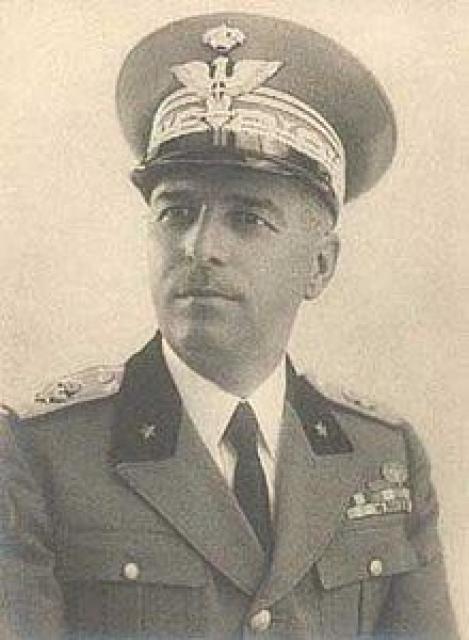
Vittorio Ambrosio
 Italy
Italy- Biographical Sketch of Vittorio Ambrosio
- World War I and Interwar Years
- Command Positions
- Chief of General Staff and Military Planning
- Attempts at Strategic Autonomy
- Negotiations with Allies
- Downfall of Mussolini and Aftermath
- Italian Surrender and German Occupation
- Later Years
Biographical Sketch of Vittorio Ambrosio
Early Life and Military CareerVittorio Ambrosio was born on July 28, 1879, in Turin, Italy. He graduated from the military school in Modena in 1898 and began his service in the 20th Cavalry Regiment "Cavalleggeri Roma." Ambrosio rose through the ranks, becoming commander of an escadron in 1911.
World War I and Interwar Years
During the Libyan Campaign of 1913 and World War I, Ambrosio participated with distinction. From 1922, he commanded the "Savoia Cavalleria" Regiment in Milan. Subsequently, he served as the head of the Cavalry School in Pinerolo and the commander of the 2nd Armored Division "Emanuele Filiberto Testa di Ferro."
Command Positions
In 1933, Ambrosio became the inspector of mobile forces. He was appointed commander of the XII Armored Corps of Sicily in 1935 and commander of the 2nd Army in 1938. Ambrosio played a key role in the campaign against Yugoslavia, capturing Ljubljana and advancing on Karlovac in 1941.
Chief of General Staff and Military Planning
Rise to ProminenceIn January 1942, Ambrosio was appointed Chief of Staff of the Army, replacing General Mario Roatta. In January 1943, he succeeded Marshal Ugo Cavallero as Chief of General Staff of the Italian Army.
Attempts at Strategic Autonomy
Ambrosio advocated for a more independent military policy for Italy, distancing the country from Germany. He sought to influence military planning in North Africa, but faced resistance from German commanders.
Negotiations with Allies
Concerned about Italy's deteriorating position, Ambrosio urged Benito Mussolini to consider breaking the alliance with Germany and negotiating with the Allies. He accompanied Mussolini to meetings with Adolf Hitler in Salzburg and Feltre.
Downfall of Mussolini and Aftermath
Role in Mussolini's OusterDespite his role in planning military operations, Ambrosio actively participated in Mussolini's overthrow in July 1943. He ordered the withdrawal of Mussolini's guard division from Rome, leaving the city vulnerable.
Italian Surrender and German Occupation
Ambrosio initiated negotiations with the Allies but faced distrust. After the German occupation of Northern Italy and Rome, Pietro Badoglio removed Ambrosio from command in November 1943. He was replaced by General Delio Messè.
Later Years
Ambrosio was relegated to a ceremonial post as Inspector General of the Armed Forces. He retired from service in 1945 and passed away in Alassio on November 19, 1958.



