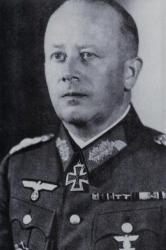
Franciszek Kleeberg
- General Franciszek Kleeberg: Poland's Unconquered Hero
- Early Life and Education
- Military Career
- World War II
- Unconquered Resistance
- Imprisonment and Death
General Franciszek Kleeberg: Poland's Unconquered Hero
General Franciszek Kleeberg is renowned for his unwavering resistance against the German invasion in 1939, remaining undefeated by the Nazis.
Early Life and Education
Kleeberg was born on February 1, 1888, in Tarnopol (present-day Ternopil, Ukraine). His father, an officer in the Austrian cavalry, had fought in the Polish uprising of 1863. Kleeberg attended the Cadet Corps and later the Military-Technical Academy in Mödling. He also studied at the Artillery School in Heumasker and the Vienna War College.
Military Career
Pre-World War IIFrom 1915 onwards, Kleeberg served in staff positions with the Polish Legions of the Austro-Hungarian Army. Following the outbreak of the Polish-Soviet War in 1919, he served as Chief of Staff of the 1st Army and the operational group of General Kazimierz Raszewski.
World War II
At the outbreak of World War II, Kleeberg commanded the IX Corps District in the Brest region. On September 11, he was tasked with organizing the defense of Polesie, preventing the Germans from outflanking the Northern Front. He created the "Polesie" Operational Group based on the IX Corps' forces.
Unconquered Resistance
The group's first engagements were the defense of Brest (September 14-16) and Kobrin (September 16-18). After the Soviet invasion on September 17, Kleeberg's forces regrouped at Kovel. They numbered around 20,000, including two infantry divisions, a cavalry brigade, and two independent regiments.
On September 22, Kleeberg decided to march west to relieve the besieged Warsaw. His troops crossed the Western Bug on September 27. However, facing severe shortages of supplies, they diverted to Demblin, where they captured large military stores.
On October 1, upon learning of Warsaw's capitulation, Kleeberg resolved to continue westward, launching a guerrilla war in the forests. On October 2, his forces clashed with German and Soviet troops near Kock.
Despite successes, the shortages of food and ammunition forced Kleeberg to capitulate to the Germans on October 5. He had captured several dozen Red Army soldiers, some of whom joined his unit and fought valiantly.
Imprisonment and Death
After his surrender, Kleeberg was imprisoned at Oflag IV-B Königstein near Dresden. He died on April 5, 1941, in a military hospital in Weisser Hirsch, near Dresden.