Francoise-Louise de Warens
 Switzerland
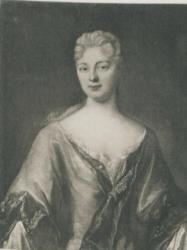
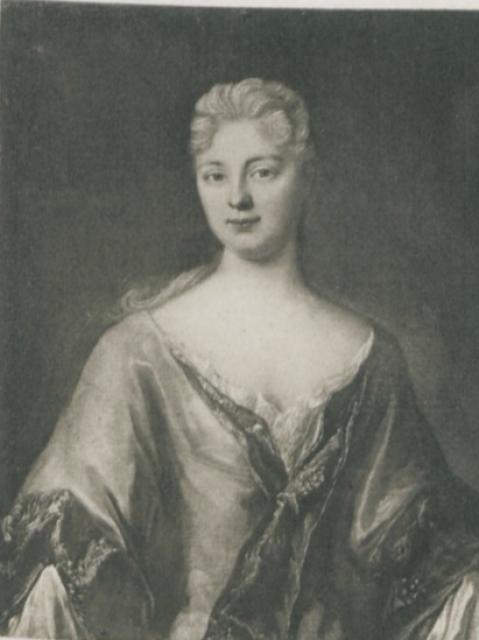
Françoise-Louise de Warens (March 31, 1699–July 29, 1762), often called Madame de Warens, was a Swiss-born patron, educator and businesswoman remembered for her formative relationship with the philosopher Jean-Jacques Rousseau. She gave the young Rousseau refuge and guidance, encouraged his intellectual development, and later became his companion. His autobiographical *Confessions* made their relationship central to the story of his youth.
Early life and conversion
Born in Vevey in the Pays de Vaud, she was originally named Louise-Éléonore de la Tour du Pil. She came from a Protestant family of the minor nobility. At about fourteen, she married Sébastien-Isaac de Loys, lord of Warens, and thereafter became known by her married name.
In 1726, she left her husband and moved to Annecy, then in the Duchy of Savoy. She converted from Protestantism to Roman Catholicism. The conversion brought her a pension from the Sardinian court, which supported her work among other converts. Her move was also a bold break with her family and the Protestant society of her birthplace.
Meeting Jean-Jacques Rousseau
In 1728, the fifteen-year-old Rousseau arrived in Annecy after leaving Geneva and converting to Catholicism. A local priest introduced him to de Warens, who received him and helped arrange his onward education in Turin. When Rousseau returned to Annecy in 1729, she took a sustained role in his development.
De Warens encouraged him to study religion, mathematics, literature and music, and helped him become more confident in society. In his *Confessions*, Rousseau called her “Maman,” a name that reflected both her maternal care and the intimacy that later developed between them. Their relationship became romantic when he was an adult. For a number of years, she was his protector and companion, and their time together at Les Charmettes near Chambéry became one of the most important periods in his memoirs.
Rousseau eventually left to pursue work and a life of his own. The emotional and intellectual influence of de Warens remained significant in his writing. Later readers have often seen aspects of her in the benevolent female figures of his fiction, especially *Julie, or the New Heloise*.
Business ventures and later years
De Warens had an active life beyond her association with Rousseau. She managed a household and pursued several business ventures, including manufacturing and enterprises connected with pottery, iron and coal. These undertakings brought periods of financial difficulty and uncertainty. Her income also depended on the pension she received from the Sardinian monarchy and support from her circle.
After Rousseau’s departure, she lived mainly around Chambéry. She continued to receive visitors and to manage her affairs, though her later life was less secure than the years when she had first taken in the young philosopher. She died in Chambéry in 1762.
Legacy
Madame de Warens occupies a distinctive place in Rousseau’s life story: she was at once benefactor, teacher, maternal figure and lover. Rousseau’s vivid account of their years together ensured her lasting fame, though it also meant that her own achievements were often viewed through his memoirs. Her independent choices—leaving her marriage, changing religious allegiance, supporting converts and managing businesses—show a woman navigating the constraints of eighteenth-century society with considerable initiative.