
Frank William Brangwyn
 Great Britain
Biography of Frank Brangwyn
Sir Frank William Brangwyn was a British artist born in 1867 in Bruges, Belgium. His father was the owner of a carpet factory, and the family moved to England when Frank was still a child. Although he initially learned drawing from his father, he later studied under the renowned art critic and reformer William Morris. However, Brangwyn was primarily self-taught and did not have formal artistic education.
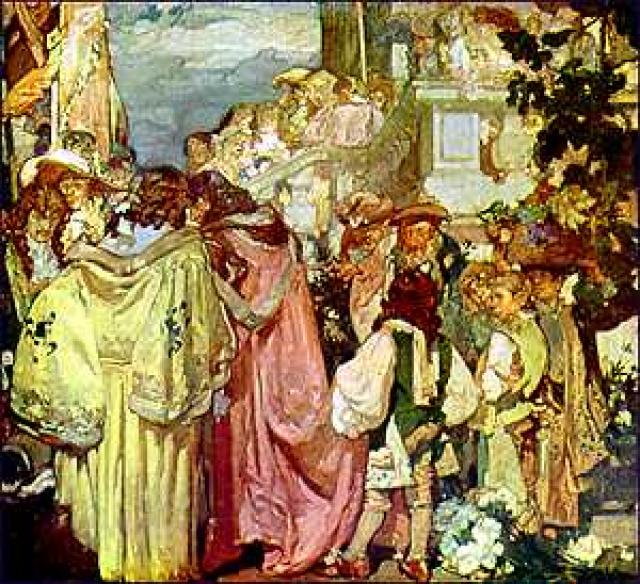
Brangwyn's decision to establish himself as a painter solidified after his painting was accepted at the Royal Academy Summer Exhibition. His early works focused on the sea and marine life, and he later expanded his subject matter by incorporating his impressions from various trips. Due to limited funds, Brangwyn would often work as a sailor just to be on board ships during his travels. His painting "Funeral At Sea" in 1890 won a third-class medal at the Paris Salon in 1891.
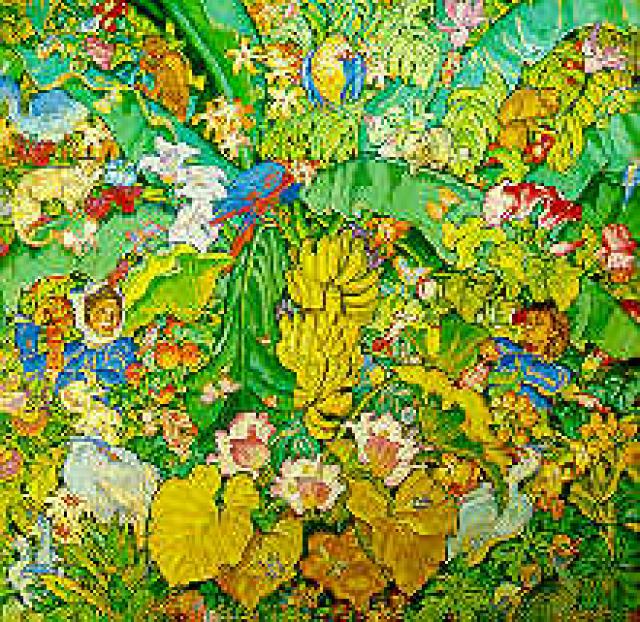
By the end of the 19th century, many artists turned to Orientalism, and Brangwyn captured his impressions of Spain, Morocco, Egypt, Turkey, Africa, and even South Africa in vibrant and colorful paintings. However, Brangwyn is most revered today for his etchings from the 1900s to the 1920s. His large-scale etchings first gained attention at an exhibition in 1903. Compared to the prevalent small and delicate landscapes of the time, Brangwyn's works were characterized by their monumental size. The artist seemed to urge viewers to perceive his works from a distance. His paintings were executed with a strong contrast of black and white, making them magnificent wall decorations.

In addition to their size, Brangwyn's paintings were notable for their subjects. Steel structures and towering cranes reached towards the sky, while thick clouds of steam emerged from chimneys. Amidst this industrial triumph, tiny figurines of people, intentionally depicted with sharp and angular lines, could be seen. Some of the notable paintings from this series include "Construction of the Victoria and Albert Museum" in 1904, "Cannon Street Station" in 1911, and "Shipbuilding" in 1912.

Brangwyn's etchings also depicted the everyday lives of people from different countries, the harsh beauty of majestic European cities, the peculiarities of labor, and the celebration of industry. His style was characterized by sharp and rough lines, a technique he adopted from Rembrandt's late etchings, which he studied attentively. Brangwyn actively employed tonal variations in the surface of the engraving plate, enriching the visual impact of the prints when inked for printing.
One prominent theme in Brangwyn's body of work was the First World War. His war-themed lithographs and posters were imbued with passionate anti-militarist protest. However, despite creating over 80 paintings and posters about the war, Brangwyn is not officially recognized as a war artist.
Brangwyn's etchings after 1912 showcase his artistic maturity and flourishing career. His best works are considered to be the etchings from the late 1910s and 1920s, including "Interior of the Church in Herve," "The End of the Ship 'Britain'," "Ponte Rotto Bridge in Rome," and "Tower Bridge in London." In 1925, Brangwyn donated a significant collection of his works to the Engraving Cabinet of the Pushkin Museum of Fine Arts in Moscow, where they are still housed today. Towards the end of his life, Brangwyn contributed many of his paintings to museums and galleries across Europe.
Brangwyn married Lucy Ray in 1896, but the couple did not have any children. Lucy passed away in 1924. Frank Brangwyn died on June 11, 1956, at the age of 89, in his home in Sussex, England. In recognition of his contributions to the arts, he was knighted as a Grand Officer of the Order of Leopold II and honored as a Citizen of Honor by the city of Bruges.


