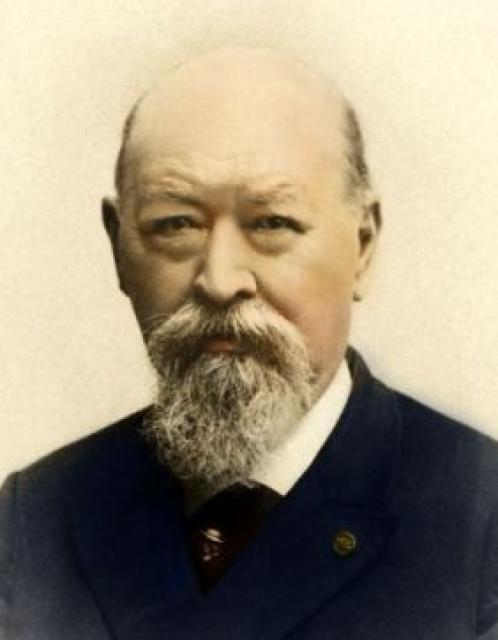
Frants Zuppe
 Austria
Franz von Suppé: Austrian Composer
Early Life and EducationFranz von Suppé, born Francesco Ezechiele Ermenegildo Suppé-Demelli on April 18, 1819, in Split, Dalmatia, displayed a musical inclination from a young age. By the age of 15, he had composed several church pieces. In 1835, following his widowed mother's relocation to Vienna, he studied under Ignaz Seyfried, a pupil of Mozart.
Theatrical Career
In 1849, Suppé became the conductor at Vienna's Theater in der Josefstadt. Over the next two decades, he composed music for approximately 180 farces and vaudevilles. While these works have largely been forgotten, his overture to "Dichter und Bauer" and the song "O, meine Heimat!" from "Die Mandragora" have endured as beloved pieces.
Operettas and Masterpieces
With the rise of operetta, popularized by Jacques Offenbach, Suppé turned his attention to the genre. Among his notable one-act operettas are "Zehn Mädchen und kein Mann" (1862), "Die schöne Galathee" (1865), and "Leichte Kavallerie" (1866). In 1876, when Johann Strauss II declined to compose an operetta, Suppé seized the opportunity and created "Fatinitza." Its success was surpassed only by his subsequent magnum opus, "Boccaccio" (1879).
Later Years and Legacy
Franz von Suppé passed away in Vienna on May 21, 1895. His legacy as an Austrian composer lives on through his enchanting melodies and memorable works. "O, meine Heimat!" remains a cherished patriotic song, while "Boccaccio" and other operettas continue to be enjoyed by audiences worldwide. Suppé's contributions to the world of music have cemented his place as a master of his craft.