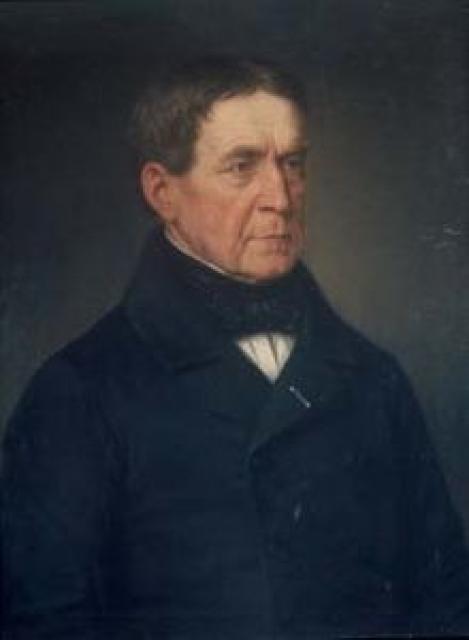
Franz Xaver von Baader
 Germany
- Franz Xaver von Baader: German Philosopher and Theosophist
- Intellectual Circle and Philosophical Approach
- Academic Career and Publications
- Religious and Social Philosophy
- Legacy and Publications
Franz Xaver von Baader: German Philosopher and Theosophist
Early Life and InfluencesFranz Xaver von Baader was born on March 27, 1765, in Munich, Germany. He initially pursued medical studies, later studying mineralogy in England from 1792 to 1796. He was influenced by the mystical writings of Jacob Böhme and Neoplatonism.
Intellectual Circle and Philosophical Approach
Along with his friend Schelling, Baader was a member of an intellectual circle in Munich. He sought to reconcile Catholic philosophical traditions with mysticism, challenging the prevailing philosophical schools of rationalism and empiricism. Baader's emphasis on the interconnectedness of matter and consciousness, body and spirit, became a central theme in his religious philosophy.
Academic Career and Publications
Baader resigned from his position as superintendent of coal mines in Bavaria in 1820, devoting himself to philosophy and theology. He became a professor of philosophy and theology at the University of Munich from 1826 to 1838. During this time, he founded the journal "Eos."
Religious and Social Philosophy
Baader's religious philosophy emphasizes the inner connection between matter and consciousness. He viewed matter as a manifestation of spirit that had lost its freedom. He believed that knowledge was inseparable from knowledge of God, whom he conceived as a progressively expanding consciousness.
In social philosophy, Baader opposed liberalism, advocating instead for a class hierarchy and the subordination of the state to the church. He criticized British empiricists and Kant's ethical philosophy, arguing that individuals should submit to God's will as revealed through Scripture and the teachings of the Roman Catholic Church.
Legacy and Publications
Baader died in Munich on May 23, 1841. His collected works, "Sämtliche Werke," were published in 16 volumes in Leipzig from 1851 to 1860. Baader's ideas influenced the German Romanticism movement and later thinkers such as Schelling and Kierkegaard.


