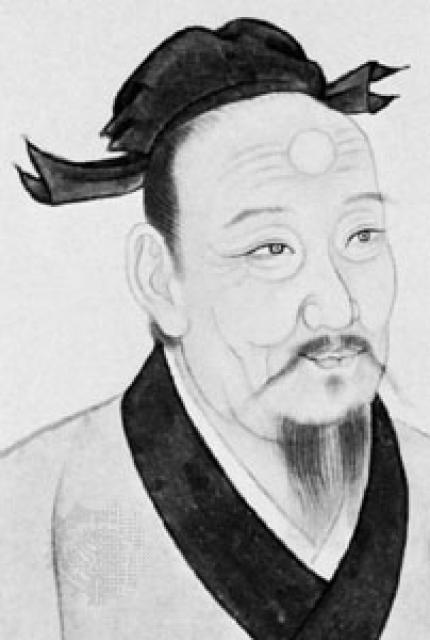
Gongsun Long
- Gongsun Long: An Eminent Philosopher of the School of Names
- The Paradox of the "White Horse"
- Extant Writings
- A Pioneer of Logical Paradoxes
- Opposition to War
- Influence on Chinese Philosophy
- Revived Interest in Gongsun Long's Thought
Gongsun Long: An Eminent Philosopher of the School of Names
Gongsun Long, an ancient Chinese philosopher, was a renowned member of the School of Names (ming jia), known for its focus on language and logic. Born in the Zhao kingdom, he gained fame as an adept debater.
The Paradox of the "White Horse"
Gongsun Long's most famous argument is the paradox, "A white horse is not a horse." This provocative statement challenged the traditional concept of categories and the relationship between names and reality.
Extant Writings
A treatise of six chapters has been attributed to Gongsun Long, though the first chapter is believed to be an introduction written by his followers. He is also known for his paradoxical statements found in the Zhuangzi and the Liezi.
A Pioneer of Logical Paradoxes
Some of Gongsun Long's statements resemble the paradoxes proposed by Zeno of Elea, such as his "Dichotomy" and "Flying Arrow." These paradoxes raised questions about the nature of change and the validity of certain assumptions.
Opposition to War
Gongsun Long was a pacifist who opposed war. He believed that focusing on arbitrary names and distinctions could lead to conflicts.
Influence on Chinese Philosophy
According to the eminent historian of Chinese philosophy, Feng Youlan, Gongsun Long's emphasis on the absoluteness of names led him to a theory akin to Plato's Forms. His philosophy has also been connected to the Yinyang School represented by Zou Yan.
Revived Interest in Gongsun Long's Thought
In recent years, there has been a growing interest in the philosophy of Gongsun Long and the School of Names. Scholars continue to explore the implications of their ideas on language, logic, and the nature of reality.



