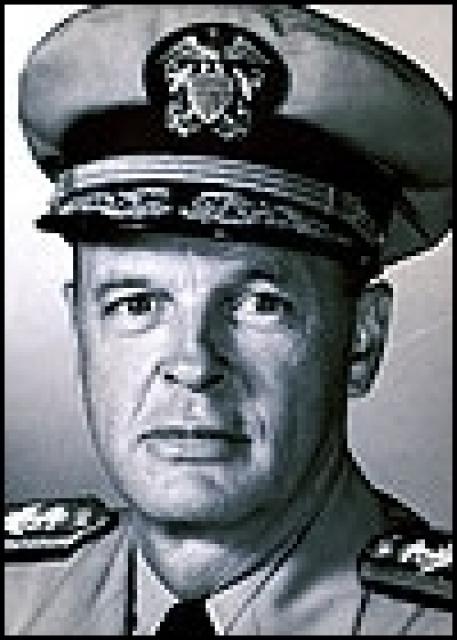
Frederick Ashworth
 USA
USABiography of Frederick Ashford
Frederick Ashford, a pilot who dropped the atomic bomb on Nagasaki, never expressed remorse for the death of 150,000 people. This Wednesday, news broke of the death of Vice Admiral Frederick Ashford of the United States Armed Forces. The high-ranking military officer, who passed away from a heart attack at the age of 93, became infamous for dropping the atomic bomb on the Japanese city of Nagasaki 60 years ago. During World War II, Ashford was considered a qualified specialist in weaponry. It was this "good American guy" who became the executioner of Nagasaki on August 9, 1945, as the atomic bomb dropped by him claimed the lives of approximately 150,000 people. The atomic bombings of Hiroshima and Nagasaki became one of the final chapters of World War II. The national catastrophe that befell Japan did not come as a surprise - Tokyo was punished for its attempt to achieve complete dominance in the Far East by unleashing terror throughout Asia. The American press did not pay excessive attention to Ashford's death. Only leading national publications reported some facts from this man's biography. By the way, after the war, Ashford had a successful career and retired in 1968.
Interestingly, even Japanese newspapers, including well-known publications such as "Asahi" and "Yomiuri," also reacted to Ashford's death with dry informational reports. Shortly before his death, in interviews with several American media outlets, Ashford confirmed that the original target of the Americans was the city of Kokura. However, heavy cloud cover prevented the attack, leading to the decision to drop the atomic bomb, named after Winston Churchill as "Fat Man," on Nagasaki. Surrounded by his wife, three children, and grandchildren, Ashford died without feeling any remorse for the main event of his life. He always believed that he had sought revenge for the Japanese attack on Pearl Harbor in 1941 and the horrific terror unleashed by the Japanese in the occupied countries of Asia.
According to Igor Latyshev, the chief research fellow at the Institute of Oriental Studies of the Russian Academy of Sciences, Japanese society has had an "allergy to the topic of nuclear weapons" for many years. In general, everyone is aware that the atomic attacks on Hiroshima and Nagasaki were dictated not only by military-strategic interests but also by the need to demonstrate their military power to the Soviet Union.



