Freya Clarke
 Great Britain
- Misdiagnosed and Shocked
- A Nightmare Unfolds
- Devastating News and Heartbreaking Support
- A Life-Threatening Setback
- Touching Christmas Miracle
- Return Home and Ongoing Challenges
- Advocacy and Awareness
- Acute Myeloid Leukemia
- AML is most commonly a disease of older adults.
Young British Traveler Discovers Devastating Truth Behind Bikini Line Bruises
Freya Clark, a 26-year-old traveler from East Grinstead, Sussex, embarked on an adventure to Australia seeking a break from her marketing and sales job and the "mundane" life in London. However, her vacation took a sinister turn when she developed unusual bruises in sensitive areas of her body.
Misdiagnosed and Shocked
"I kept brushing it off, telling myself I must have knocked myself at the bar," Freya recalls. Despite her attempts to rationalize the bruises, they continued to spread. Clark considered anemia but never suspected anything as severe as cancer. Seeking reassurance, she sought medical attention in Australia. Blood tests revealed shocking news: Freya was suffering from acute myeloid leukemia.
A Nightmare Unfolds
"I just thought, 'Well, there goes my holiday,'" Freya says of the initial diagnosis. Doctors expressed uncertainty, leaving Freya hopeful that they were mistaken, as she had no other symptoms besides the bruises. However, a second diagnosis confirmed her worst fears. The shock was immeasurable.
Devastating News and Heartbreaking Support
"The hardest part was telling my mom," Freya remembers. "I passed the phone to my friend Caitlin and asked her to explain to my mom, but she burst into tears, so I had to do it myself."
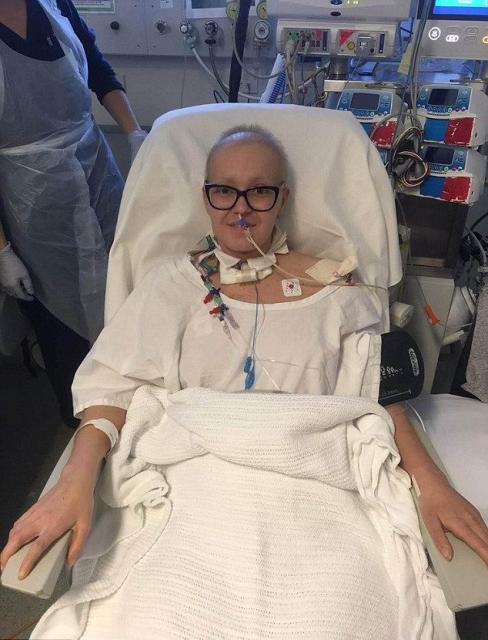
Freya's mother, 59-year-old Christine, flew to Sydney and stayed by her daughter's bedside for three months. Freya underwent grueling chemotherapy in Australia, which caused her hair to fall out and left her in constant, excruciating pain.
A Life-Threatening Setback
The aggressive treatment took such a toll on her body that Freya was placed in an induced coma for eight weeks to allow her body to cope with the drugs. As doctors began to bring her out of the coma, her heart stopped for several minutes.
Touching Christmas Miracle
With her prognosis grim, Freya's heartbroken father, Peter Clark, 63, and her sister, Sorrel, 29, traveled to Australia to be with her. Miraculously, after emerging from the coma, Freya began to recover, and her family celebrated Christmas together in her hospital room.
Return Home and Ongoing Challenges
"It was bizarrely one of the nicest Christmases because it was the first Christmas my whole family had been together," Freya says. "Caitlin was there, and my friend James from the UK flew out a few days before Christmas to surprise me."
Regaining strength enough to return home, Freya was flown to The Royal Marsden cancer hospital in January 2018. There, she contracted an infection that required an eight-hour surgery to remove her appendix and right fallopian tube. The procedure drastically reduced Freya's chances of conceiving children.
Back in her parents' home, Freya is uncertain of her prognosis, with doctors suggesting she may need further chemotherapy.
Advocacy and Awareness
"I know there's a high chance I'll need more treatment, which isn't nice," says Freya. "But I feel amazing right now, so much better than when I first got ill."
Freya is now dedicated to raising awareness about leukemia symptoms. She works with the charity Leukaemia Care, helping to promote their Spot Leukaemia campaign, which produces "Symptom Spot Cards" to aid healthcare professionals in making a diagnosis.
"I would love to go back [to Australia] one day," Freya says, "but I'm not sure if I'll ever want to live there again. I wouldn't have coped last year without my friends and family, so I won't leave them again."
"I've been through the mill in the last year. It's not what you think about when you go on holiday—coming back with cancer and a five-inch scar down your stomach. It's a hard thing to get your head around."
Acute Myeloid Leukemia
Acute myeloid leukemia (AML) is a malignant disease of the myeloid line of blood cells. It begins in young white blood cells in the bone marrow.
In the United Kingdom, AML affects around one in 200 men and one in 255 women of all ages.
In the United States, approximately 19,500 new cases are diagnosed each year.
AML is most commonly a disease of older adults.
Symptoms of AML include fatigue, fever, frequent infections; easy bruising or bleeding, including nosebleeds and heavy periods; weight loss, bone and joint pain, breathlessness, abdominal swelling, and pale skin.
The exact cause of AML is unknown, but some risk factors include: smoking, obesity, exposure to radiation, previous chemotherapy or radiation therapy; certain blood disorders, such as myelodysplastic syndrome; and some immune diseases, including rheumatoid arthritis.
AML is typically treated with chemotherapy. A bone marrow or stem cell transplant may be necessary.


