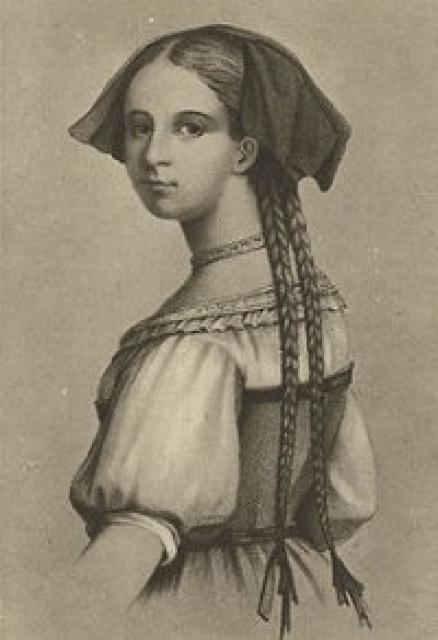
Friederike Brion
 France
- Friederike Brion: Muse and Inspiration
- Courtship and the "Sesenheim Songs"
- Farewell and Aftermath
- Legacy and Influence
Friederike Brion: Muse and Inspiration
Friederike Brion, the daughter of an Alsatian pastor, gained renown for her passionate yet brief romance with the young Johann Wolfgang von Goethe. In 1770, while Goethe was studying in Strasbourg, he encountered Friederike during a countryside stroll near the town. Her captivating nature left an indelible mark on the poet.
Courtship and the "Sesenheim Songs"
Goethe made frequent visits to the village of Sesenheim, where the Brion family resided. The young couple embarked on leisurely walks, boat rides, and social gatherings. For a year, Sesenheim became the center of Goethe's universe. His boundless joy found expression in a series of verses and songs, which he sent to his beloved accompanied by "painted ribbons." These "Sesenheim Songs" (including "Welcome and Farewell," "May Song," and "Bluebell") laid the foundation for the Sturm und Drang movement and established Goethe's reputation as a lyrical writer.
Farewell and Aftermath
Unfortunately, their romance was short-lived. Goethe's last meeting with Friederike occurred on August 7, 1771, before his departure for Frankfurt. From Frankfurt, Goethe penned a letter to Friederike, effectively ending their relationship. In 1772, the heartbroken Friederike received a marriage proposal from the poet Jakob Michael Reinhold Lenz, but she declined. She remained unmarried for the rest of her life.
Legacy and Influence
The love story of Goethe and Friederike Brion became an enduring tale of passion and heartbreak. In 1928, Franz Lehár immortalized their romance in the operetta "Friederike." Friederike's legacy as the muse who inspired Goethe's early lyrical masterpieces continues to be celebrated today.


