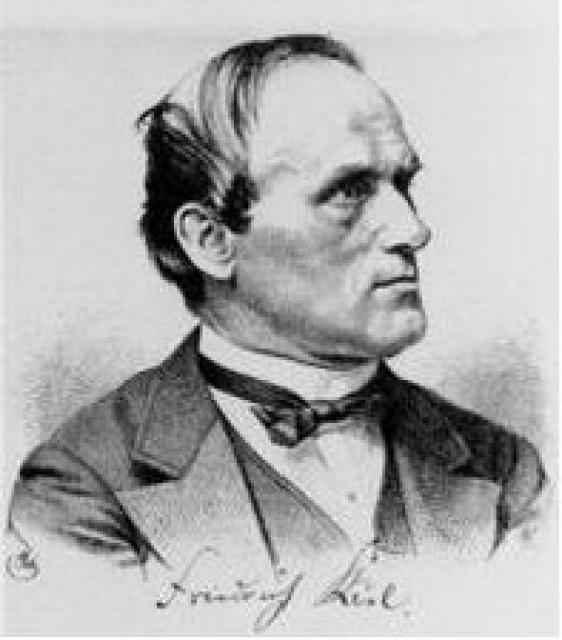
Friedrich Kiel
 Germany
- Friedrich Kiel: A Talented Self-Taught Composer
- Early Influences and Career
- Mountaineering and Creative Heights
- Musical Style and Recognition
- Teaching Legacy
Friedrich Kiel: A Talented Self-Taught Composer
German composer Friedrich Kiel emerged as a gifted prodigy, beginning his musical journey at the tender age of six. His remarkable talent caught the attention of Count Sayn-Wittgenstein-Berleburg, who nurtured his abilities and sent him to study under the renowned flutist and composer Caspar Kummer.
Early Influences and Career
Upon his return, Kiel led the Count's chapel from 1840 to 1842. His artistic endeavors were further refined under the guidance of Ludwig Spohr. Subsequent studies in Berlin with Siegfried Dehn and Flodoard Geyer honed his musical craft. In 1852, Kiel's first notable composition, Fifteen Canons for Piano, Opus 1, was published in Leipzig, dedicated to the renowned Franz Liszt.
Mountaineering and Creative Heights
Beyond his musical pursuits, Kiel was an enthusiastic mountaineer, scaling the lofty peaks of the Monte Rosa massif in his sixties. His adventurous spirit extended into his compositions, which included a requiem (1862), the oratorio "Christ" (1870), piano concertos, chamber works, and numerous songs.
Musical Style and Recognition
Kiel's musical style struck a balance between the conservative tradition inherited from Robert Schumann and Felix Mendelssohn and the innovative ideas of Franz Liszt. His oratorio, in particular, achieved wide acclaim in Germany. Despite his artistic moderation, Kiel garnered the support of Hans von Bülow, who initially criticized his Variations and Fugue, Opus 17, but later reversed his opinion.
Teaching Legacy
Friedrich Kiel's impact extended beyond his compositions. He began teaching in 1866 at the Stern Conservatory and later became a professor there in 1868. In 1870, he joined the Berlin Higher School of Music, founded by Joseph Joachim. Among his notable students were Anton Averkamp, Ignacy Paderewski, Moritz Moszkowski, Antoni Stolpe, Bernhard Stavenhagen, Arnold Krug, and August Bungert.