Friedrich Paschen
 Germany
- Biography of Friedrich Paschen
- Education and Early Career
- Professorship at the University of Tübingen
- Paschen's Law and Paschen Series
- Paschen-Back Effect and Instruments
- Membership and Later Years
Biography of Friedrich Paschen
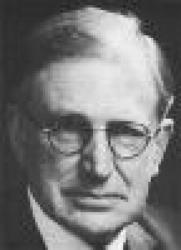
Friedrich Paschen, whose full name was Louis Karl Heinrich Friedrich Paschen, was a German physicist and an honorary foreign member of the USSR Academy of Sciences. He was born in 1865 in Schwerin, Mecklenburg-Schwerin, Germany.
Education and Early Career
Paschen studied at the University of Berlin and later in Strassburg. He obtained his doctoral degree in 1888. In the same year, he began working as an assistant to Wilhelm Hittorf at the Academy of Münster, where he stayed for three years. From 1891 to 1901, Paschen worked with Heinrich Kayser. Additionally, he gave lectures at the Technical Academy of Hanover.
Professorship at the University of Tübingen
In 1901, Paschen obtained a professorship at the University of Tübingen. During his time in Tübingen, his main scientific interest was the study of atomic spectra, atomic spectroscopy, and quantum theory of radiation. He conducted numerous measurements of the wavelengths of various spectral lines. Paschen also developed several new light sources with different excitation characteristics and made precise measurements of dispersion in substances, revealing many fine details of spectral structure.
Paschen's Law and Paschen Series
In 1889, Paschen derived Paschen's Law, which provides an expression for the breakdown voltage of electric discharge in gases. In 1908, he discovered the first two lines of a new hydrogen series in the infrared region of the spectrum, known as the Paschen series.
Paschen-Back Effect and Instruments
In 1912, Friedrich Paschen, together with Ernst E. A. Back, discovered the Paschen-Back effect, which explains the simplification of spectral line splittings in a strong magnetic field. Paschen also constructed and developed a significant number of measuring instruments. He invented the highly sensitive radiomicrometer and galvanometer, as well as the concave diffraction grating and several other devices.
Membership and Later Years
Paschen was elected as a foreign member of the USSR Academy of Sciences in 1930. In 1924, he became the president of the Physikalisch-Technische Reichsanstalt (Imperial Physical-Technical Institute). However, in 1933, he was removed from this position by the Nazis who came to power.
In the winter of 1947, Paschen fell ill with pneumonia, which ultimately led to his death. Friedrich Paschen passed away on February 25, 1947.