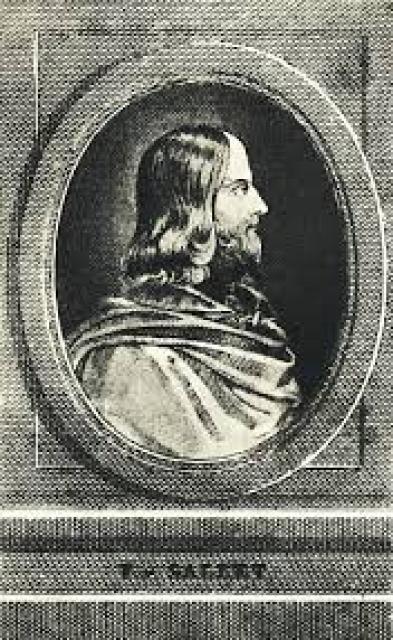
Friedrich von Sallet
 Germany
- Early Life and Military Service
- Imprisonment and Literary Fame
- Early Literary Works
- Religious Beliefs and Major Work
- Atheism Allegations and Posthumous Works
- Legacy
Early Life and Military Service
Friedrich Zaalett was a German poet born into a military family. He joined the army and rose through the ranks, but his career took an unexpected turn in 1830.
Imprisonment and Literary Fame
Zaalett published a satirical novella that mocked the military establishment, for which he was sentenced to ten years in prison. His sentence was later commuted to a mere two months, but the incident brought him to prominence as a writer.
Early Literary Works
His early writings included the collection of poems "Gedichte" (1835), the satirical collection "Funken" (1838), the heroic epic "Die wahnsinnige Flasche" (1838), and the fairy tale "Schön Irla" (1838).
Religious Beliefs and Major Work
Later in his life, Zaalett became deeply interested in religion. His most significant work, "Laienevangelium" (1847), posited the elevation of humanity as the ultimate goal of Christianity and advocated for a new moral system. This work attracted controversy and was condemned by some as atheistic.
Atheism Allegations and Posthumous Works
After his death, Zaalett's reputation as an atheist was further cemented by the publication of "Die Atheisten und Gottlosen unserer Zeit" (1852). Additionally, his "Erläuterung zum zweiten Teile vom Goetheschen Faust für Frauen" (1844) was a notable commentary on Goethe's classic work.
Legacy
Zaalett's collected works were published in three volumes between 1845 and 1848. His writings continue to be studied and appreciated for their wit, satire, and exploration of theological themes.


