Friedrich Wilhelm Seydlitz-Kurzbach
- Friedrich Wilhelm von Seydlitz-Kurzbach, Prussian Cavalry General
- Early Life and Education
- Military Career
- Cavalry Leadership in the Seven Years' War
- Inspector General of the Silesian Cavalry
- Legacy
- Notable Descendant
Friedrich Wilhelm von Seydlitz-Kurzbach, Prussian Cavalry General
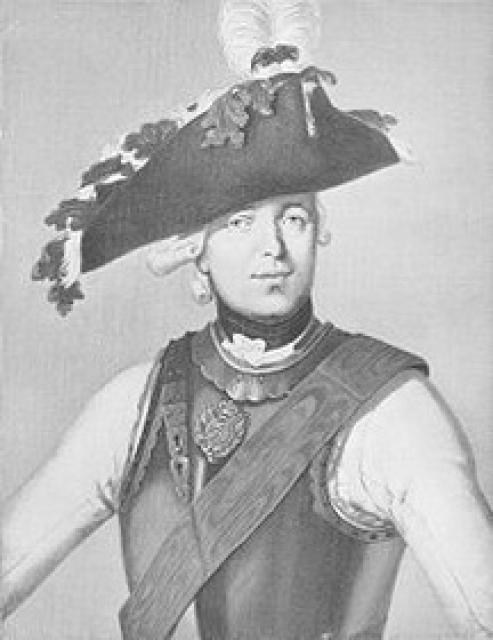
Friedrich Wilhelm von Seydlitz-Kurzbach was a renowned Prussian cavalry general who served under Frederick the Great.
Early Life and Education
Born on February 3, 1721, in Kalkar, Seydlitz was the son of a Prussian cavalry officer. His noble lineage traced back to a Silesian aristocratic family mentioned in records as early as 1287. He received a comprehensive education before enlisting in the military in 1738.
Military Career
Seydlitz's military service began as a cornet in the cuirassier regiment of Margrave Friedrich Wilhelm von Brandenburg-Schwedt. His bravery and determination earned him promotions throughout his career. In 1743, he became a captain, followed by major in 1745, lieutenant colonel in 1752, and colonel in 1755. In 1757, he was appointed commander of the 8th Cuirassier Regiment.
Cavalry Leadership in the Seven Years' War
Seydlitz's tactical acumen shone during the Seven Years' War (1756-1763). At the Battle of Kolin, he led a cavalry brigade in a decisive attack against Austrian infantry and cavalry, covering the Prussian army's retreat. This action earned him a promotion to major general. He continued to excel in battles such as Rossbach, Zorndorf, and Freiberg, demonstrating his skill in maneuvering and reorganizing cavalry formations during fast-paced attacks.
Inspector General of the Silesian Cavalry
In 1763, Seydlitz became the general inspector of the Silesian cavalry inspection, essentially assuming command of the Prussian cavalry. He dedicated himself to improving its training and motivation, emphasizing the importance of personal example from commanders. While demanding strict discipline, he condemned excessive corporal punishment. His reforms made the Prussian cavalry a model for the rest of Europe.
Legacy
Seydlitz's legacy as a military leader extended beyond his lifetime. He married Susanne Johanne Albertine von Hacke in 1760, and their daughter, Wilhelmine, later married into the Monjinsky family. Seydlitz's remains were exhumed and desecrated by Soviet soldiers in 1945, and his tomb in Seidlitzruh Palace was destroyed after Silesia became part of Poland. Despite these indignities, his influence as a master tactician continues to be recognized today.
Notable Descendant
Among Seydlitz-Kurzbach's descendants, General Walther von Seydlitz-Kurzbach of the Wehrmacht played a significant role in military history during World War II.