Michail Golitsin
 Russia
- Early Military Career and the Great Northern War
- Notable Victories and Honors
- Poltava and the Pursuit of the Swedish Army
- Campaigns against Sweden and the Ottoman Empire
- Later Career and Legacy
Mikhail Mikhailovich Golitsyn: A Distinguished Russian General of the Great Northern War
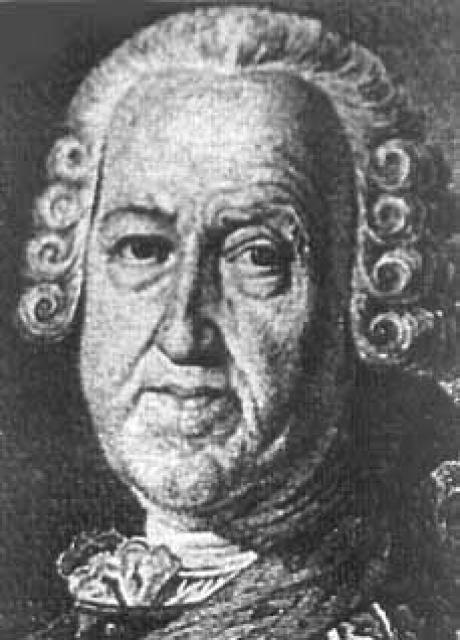
Mikhail Mikhailovich Golitsyn (1675-1730) was a distinguished Russian military leader and the son of boyar Mikhail Andreevich Golitsyn. A direct descendant of the Grand Duke of Lithuania, Gediminas, Golitsyn began his illustrious military career at a mere twelve years of age as a drummer boy in the "amusing" army of the young Tsar Peter I.
Early Military Career and the Great Northern War
Commissioned as an officer in 1694, Golitsyn quickly rose through the ranks, distinguishing himself in the Azov campaigns and the suppression of the Streltsy rebellion in 1698. During the Great Northern War, he fought valiantly at Narva and led a crucial assault on the Noteborg fortress, capturing it after a bloody thirteen-hour battle. He was subsequently promoted to lieutenant colonel and colonel.
Notable Victories and Honors
Golitsyn continued his streak of success with victories at Nienschanz, Narva, and Mitava. In 1708, he achieved a remarkable triumph at the Battle of Dobroe, defeating a larger Swedish force under the command of General Ross. For this feat, he was awarded the Order of St. Andrew the First-Called and promoted to general-lieutenant. He further solidified his reputation with his decisive actions at the Battle of Lesnaya, where he received the honor of the Tsar's own portrait with diamonds.
Poltava and the Pursuit of the Swedish Army
In the pivotal Battle of Poltava, Golitsyn commanded the guard and pursued the retreating Swedish army alongside fellow general Alexander Menshikov. He forced the surrender of Swedish Field Marshal Löwenhaupt at Perevolochna, compelling 16,000 Swedish soldiers to lay down their arms.
Campaigns against Sweden and the Ottoman Empire
Golitsyn participated in the siege and capture of Vyborg in 1710 and played a vital role in the Ingermanland Corps operations in Finland. He led the Russian army to a decisive victory at the Battle of Lappola, for which he was promoted to general-en-chef. He also commanded the Russian fleet in the naval battle of Gangut, cementing his reputation as a skilled naval tactician.
Later Career and Legacy
After the Great Northern War, Golitsyn commanded troops in St. Petersburg and Little Russia. Under Empress Catherine I, he became a general-field marshal, and under Peter II, a senator and member of the Supreme Privy Council. He played a marginal role in the "Conditions" that aimed to limit Anna Ioannovna's power, but nevertheless received her favor. After gradually losing influence at court, he passed away and was laid to rest at the Epiphany Monastery.
Mikhail Mikhailovich Golitsyn's remarkable military career left an enduring mark on Russian history. He was a skilled and courageous general who played a pivotal role in Russia's military victories against Sweden and its expansion into the Baltic region. His legacy as a military leader continues to inspire generations of Russian soldiers.