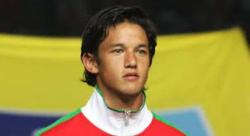
Frits Walter
 Germany
- Biography of Fritz Walter
- Club Career
- International Career
- Personal Achievements
- Legacy
- Early Career
- Internment and Return to Football
- Post-War Career
- Later Years and Retirement
Biography of Fritz Walter
Early Life and CareerFritz Walter was a German footballer who became the first iconic figure in the history of German football. He symbolizes Germany's victory in the 1954 World Cup. Despite subsequent generations producing their own idols - from Seeler to Matthaus, Fritz Walter is still remembered in Germany. He was born on October 31, 1920, in Germany.
Club Career
During his career, Fritz Walter played for several clubs in Germany. He played a total of 416 matches in the German championship, scoring 381 goals. He also played 362 matches and scored 357 goals at the regional level (Oberliga Southwest). In the final tournaments, he played 52 matches and scored 24 goals. He also played 13 matches and scored 32 goals in the German Cup.
International Career
Fritz Walter represented the German national team in 61 matches, including 30 times as captain, and scored 33 goals. He made his international debut on July 14, 1940, against Romania (9-3) and played his last match on June 24, 1958, against Sweden (1-3).
Personal Achievements
Fritz Walter was recognized as the 23rd best football player of the 20th century worldwide and the 14th best in Europe. He was also considered the 3rd best German player of the 20th century. He was a champion of the world in 1954 and won the German championship in 1951 and 1953. He also won the Oberliga Southwest championship in 1947, 1948, 1949, 1950, 1951, 1953, 1954, 1955, 1956, and 1957.
Legacy
Fritz Walter became a cult figure in German football history. He symbolizes Germany's victory in the 1954 World Cup. In 1985, on his 65th birthday, he was granted the honorary citizenship of Kaiserslautern, his hometown. The local stadium, previously known as "Betzenberg," was renamed to "Fritz-Walter-Stadion" in his honor. However, he rarely appeared at the stadium after the renaming. Fritz Walter's health deteriorated in the years following his retirement, and he passed away on June 17, 2002.
Early Career
Fritz Walter made his debut for the German national team before the war, at the age of 19. He caught the attention of Sepp Herberger, the national team coach at the time, during a friendly match against the Bavarian national team. The national team won 6-5, and Herberger was impressed with the young debutant. The only advice he gave Walter was to use his head more actively in the game.
Internment and Return to Football
During World War II, Fritz Walter, like most players, was drafted into the army, which disrupted his football career. However, he was interned in a camp on the Hungarian-Ukrainian border, where he caught the attention of a Hungarian guard who recognized him from a match between Hungary and Germany in Budapest. The guard informed Marshal Zhukov, who was in charge of the camp, and Walter was spared from being sent to Siberia. Instead, he was allowed to remain in the camp and receive better treatment.
Post-War Career
After the war, Fritz Walter returned to Kaiserslautern in 1946, and Sepp Herberger, who was rebuilding the national team, called him back to represent Germany. Their relationship was ideal, and Walter became the captain of the team. They achieved great success together, winning the 1954 World Cup. Walter's performances in that tournament, especially against Austria and Sweden, were outstanding.
Later Years and Retirement
After the 1954 World Cup, Fritz Walter faced criticism and doubts about his abilities. He temporarily retired from the national team but made a comeback in 1955. He continued to play until the 1958 World Cup in Sweden, where he suffered an injury that ended his international career. He retired from football in 1959.
Fritz Walter left a lasting legacy in German football and remains an unforgettable figure in the country's history.