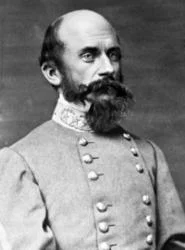
Fritz Kuhlwein
Fritz Kühlwein was a German career officer who rose to the rank of lieutenant general during the Second World War. Born on November 29, 1892, in Hatten, Alsace, he served in the German army across the Imperial, Reichswehr, and Wehrmacht periods. His career included command of infantry formations on the Eastern Front and later service with the Panzergrenadier Division Brandenburg.
A career officer
Kühlwein entered the Prussian Army in 1912 and served as an officer during the First World War, receiving both classes of the Iron Cross. After the war, he remained in the reduced Reichswehr, the German army of the interwar period. He continued to advance through command and staff posts and was promoted to lieutenant colonel in 1936 and colonel in 1939.
At the beginning of the Second World War, Kühlwein commanded a battalion in an infantry regiment. He later led the 133rd Infantry Regiment, which took part in Germany’s 1941 invasion of the Soviet Union. In February 1942, he assumed command of the 45th Infantry Division, a German Army formation fighting on the Eastern Front. He was promoted to major general in April 1942 and lieutenant general in January 1943.
Divisional commands in the Second World War
Kühlwein led the 45th Infantry Division until April 1943. In 1944 he was assigned to the Panzergrenadier Division Brandenburg, which he commanded during part of that year. The unit had originated as a special operations formation before being reorganized as a regular motorized infantry division. In the final months of the war, Kühlwein held further commands over replacement and field-training formations.
These posts placed him within the Wehrmacht during Nazi Germany’s wars of conquest and occupation. His service record reflects a long professional career, but it unfolded in an army that was central to the regime’s military expansion. Kühlwein’s own commands took him through major wartime formations rather than a civilian or political role.
Captivity and later life
Kühlwein was taken into British custody at the end of the war and remained in captivity until October 1946. After his release, he worked as a commercial representative and lived in several German cities before settling in Nuremberg. He died there on September 25, 1972, aged seventy-nine.
His career traced the transformation of Germany’s armed forces from the Kaiserreich through the Weimar era and into the Wehrmacht. Kühlwein is principally remembered as a senior infantry officer whose wartime appointments included command of the 45th Infantry Division and the Brandenburg formation.