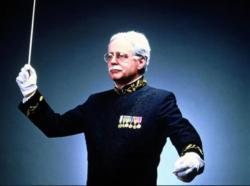
Gabriel Pierne
 France
Henri Constant Gabriel Pierné: A Renowned French Organist, Composer, and Conductor
Early Life and Education
Henri Constant Gabriel Pierné was born on August 16, 1863, in Metz, France. Born into a musical family, his father taught piano and his mother taught singing. Pierné's passion for music was evident from an early age.
He enrolled in the Paris Conservatory, where he honed his skills under the tutelage of renowned musicians such as Albert Lavignac, César Franck, and Jules Massenet. Noted composer Claude Debussy was a fellow student, and they remained close throughout their lives.
A Prolific Composer
Pierné's musical journey began at the age of 12, when he composed several chamber and symphonic works. Throughout his career, he wrote extensively, leaving behind a substantial repertoire of pieces.
Key Compositions
- Fifteen Piano Pieces (1883)- Piece for Piano and Oboe in G minor (1883)
- Canzonetta for Clarinet and Piano (Op. 19; 1888)
- Piano Concerto in C minor (Op. 25, 1890)
- Ballets "Le Collier de saphirs" (1891) and "Bouton d'Or" (1895)
- Sonata da Camera for Flute, Cello, and Piano
- Sonata for Violin and Piano (1900)
- Comic opera "La Fille de Tabarin" (1901)
- Oratorio "La Croisade des Enfants" (1902)
- Concertstück for Harp and Orchestra (1903)
- Music for Pierre Loti's play "Ramuncho" (1908)
- Oratorio "La Nuit de Noël 1870"
- Comic opera "On ne badine pas avec l'amour" (1910)
- Oratorio "Saint François d'Assise" (1912)
- Sonata for Cello and Piano (1919)
- Basque Fantasy for Violin and Orchestra (1927)
- Comic opera "Sophie Arnould" (1927)
- One-act opera "Le Chemin de l'Amour"
- Three-act opera "Don Luis"
- Comic opera "Fragonard" (1934)
A Distinguished Performer and Conductor
While Pierné's compositions are impressive, his legacy as a performer and conductor is arguably more significant. In 1890, he succeeded César Franck as organist at the prestigious Saint-Clotilde Church in Paris, a position he held with distinction.
As a Conductor
Pierné's conducting career took off in the early 1900s. He became the second conductor of the Orchestre Colonne and, after the death of its founder Édouard Colonne in 1910, took over as chief conductor. Pierné led the orchestra until 1934.
Known for his adventurous programming, Pierné championed contemporary music, including works by Darius Milhaud. This bold approach occasionally clashed with the more conservative tastes of his friend Camille Saint-Saëns.
Legacy and Recognition
Henri Constant Gabriel Pierné passed away on July 17, 1937, in Ploujean, France. He left behind a rich musical legacy, both as a composer and a conductor. Despite his prolific output, his compositions have sometimes been overshadowed by his distinguished performance career. Nevertheless, Pierné remains an important figure in French music history, leaving an indelible mark on the classical music landscape.