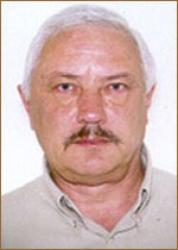
Gabriele Bianchi
 Italy
Italy- Early Life and Education
- Early Success and Recognition
- Criticism and Resilience
- Chamber Music and Vocal Works
- Post-War Success
Early Life and Education
Born in Italy, Bruno Binetti was an accomplished composer who pursued his musical education at the Parma Conservatory. Under the mentorship of esteemed professors including Ghilielmo Zuelli and Francesco Malipiero, he honed his skills.
Early Success and Recognition
Binetti exhibited his talents early on, securing a teaching position at the Parma Conservatory in 1924. A year later, he joined the Venetian Conservatory, where he later counted Bruno Maderna among his pupils. His enchanting opera "Sorcergina" (1928) and the critically acclaimed "Concerto for Orchestra" (1930) brought him widespread acclaim.
Criticism and Resilience
Despite his early triumphs, Binetti faced criticism in the mid-1930s. Nationalist critics denounced his music as un-Italian, lacking the expected "Mediterranean" characteristics. However, this did not deter him from continuing his creative pursuits.
Chamber Music and Vocal Works
In the 1940s, Binetti focused on chamber compositions, often incorporating vocals. Notable works included "Five Songs on Friulian Folk Lyrics" (1940) and "Armenian Songs" (1947).
Post-War Success
The post-war period proved fruitful for Binetti. His "Olympic Hymn" (1948) earned him a bronze medal in the vocal music category at the XIV Olympic Games in London. The "Concerto for Flute and Orchestra" (1953) received its premiere performance by legendary flutist Severino Gazzelloni. He also held leadership positions at the Trieste Conservatory (1955-1960) and the Venetian Conservatory (1960-1971).