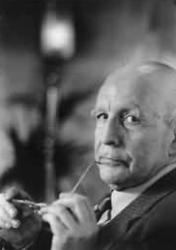
Garold Brodki
 USA
USABiography of Harold Brodkey
Harold Brodkey was an American novelist and writer. He was born into a poor Jewish immigrant family from Russia. After the death of his mother in 1932, Brodkey's alcoholic father sent him to be raised by his cousin. The young boy moved to St. Louis and took on the surname of his new parents, who named him Harold. When Brodkey was 13 years old, his adoptive father passed away and his adoptive mother fell ill with cancer.
Education and Career
In 1947, Brodkey enrolled at Harvard University and graduated in 1952 with a degree in literature. In the 1950s, he worked as a scriptwriter for NBC. His first short stories were published in "The New Yorker" magazine in 1954. Four years later, his collection of stories titled "First Love and Other Sorrows" was published. These early works focused on the author's childhood and adolescent experiences.
Personal Life
In 1962, Brodkey divorced his wife of 10 years and began exploring his sexuality, including homosexual experiences, which he later incorporated into his writings. In 1980, he remarried actress Ellen Schwamm. In 1988, his second collection of stories, "Stories in an Almost Classical Mode," was published. Many of his works were autobiographical, delving into the psychology of childhood and particularly childhood sexuality. His novel "The Runaway Soul," published in 1991, continued this theme and depicted the sexual experiences of the main character, Silenovich, as he tried to overcome the challenges he faced in his childhood.
Later Works and Legacy
In 1992, an Italian publishing house released Brodkey's novel "The Runaway Soul." This was followed by English and German editions in 1994. The novel explores the friendship between two Venetian boys who remain connected throughout their adult lives. In June 1993, Brodkey revealed that he was HIV-positive. He reflected on his life and the impact of the disease in a 1994 article titled "Dying: An Update" published in "The New Yorker" magazine.
Brodkey's writing evoked mixed reactions from critics. Some praised his intense portrayal of emotions and his profound depiction of the human psyche, comparing him to American writer Marcel Proust. Others criticized his works for their overwhelming emotional intensity. Despite the controversy, Brodkey's contributions to literature remain influential and continue to be studied and appreciated by readers and scholars.