Genry Dreper
 USA
USA- Biography of Henry Draper
- Early Life and Education
- Introduction to Astronomy
- Pioneering Work in Astrophotography
- Collaboration and Achievements
- Legacy and Contributions
Biography of Henry Draper
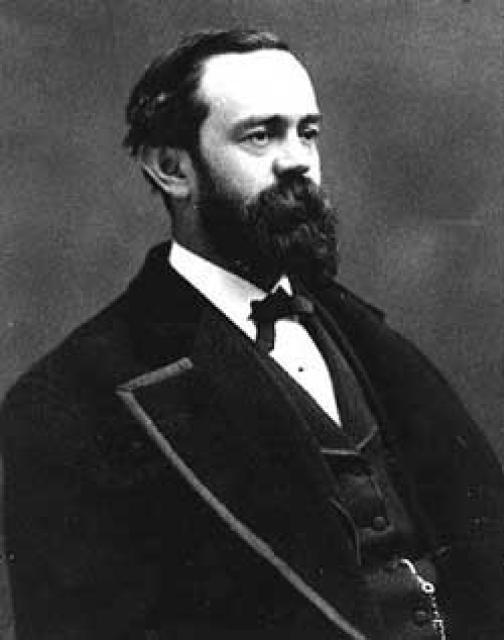
Henry Draper was an American astronomer and a member of the National Academy of Sciences in the United States. He was a pioneer in the widespread use of astronomy in the country.
Early Life and Education
Henry Draper received a medical education and began working at Bellevue Hospital in New York in 1859. He taught and eventually became a professor of natural history. In 1866, he was appointed as the dean of the medical faculty at the City University of New York.
Introduction to Astronomy
Draper's father, John W. Draper, sparked his interest in photography and astronomy. From the age of 13, Henry Draper assisted his father in a photochemical laboratory. After completing his medical education in 1857, Draper traveled abroad and visited Lord Rosse's estate in Ireland, where he saw the 72-inch "Leviathan" reflector, the largest telescope at the time. This experience left a lasting impression on him, leading him to use photography for astronomical research.
Pioneering Work in Astrophotography
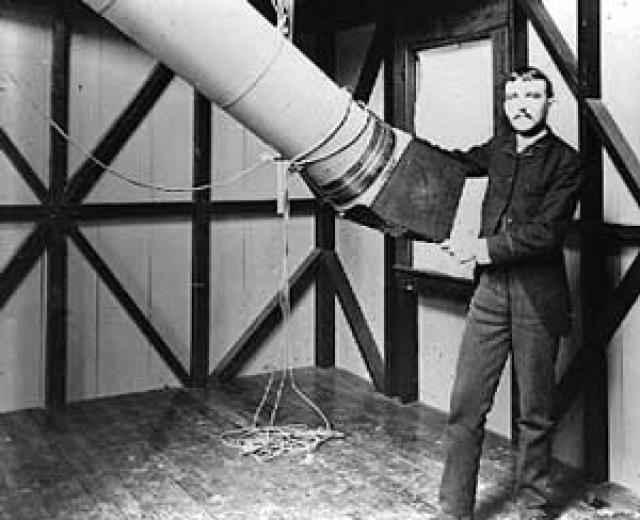
Upon his return to America, Draper began constructing his own telescope and observatory at his father's estate in Hastings-on-Hudson. Using wet collodion plates, he was one of the first to capture high-quality photographs of the Moon, Sun, and solar spectrum. He also developed an accurate mechanism for tracking telescope movement. In August 1872, Draper became the first person to photograph the spectrum of a star - Vega. He later switched to using dry photographic emulsions in 1879, which significantly reduced exposure time, allowing him to photograph the spectra of bright stars and planets.
Collaboration and Achievements
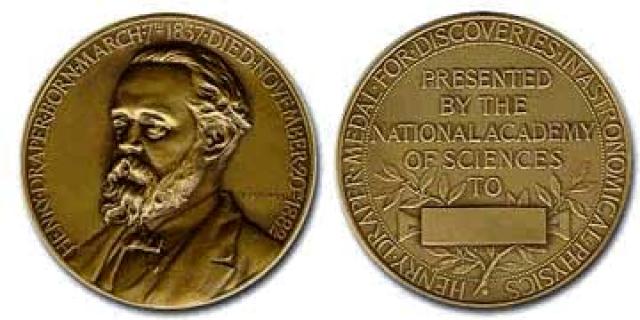
Independently, Draper and William Huggins successfully photographed the spectrum of a comet (Comet 1881 III) on June 24, 1881. Draper also produced many high-quality lunar photographs in 1863 and obtained photographs of the spectra of the Great Orion Nebula, Sun, Moon, Venus, Mars, and Jupiter in 1873. His photographs of the transit of Venus across the solar disk in 1874 led to the United States Congress minting a gold medal in his honor. This medal, named the Draper Medal, has since been awarded annually by the National Academy of Sciences for outstanding contributions to astrophysics.
Legacy and Contributions
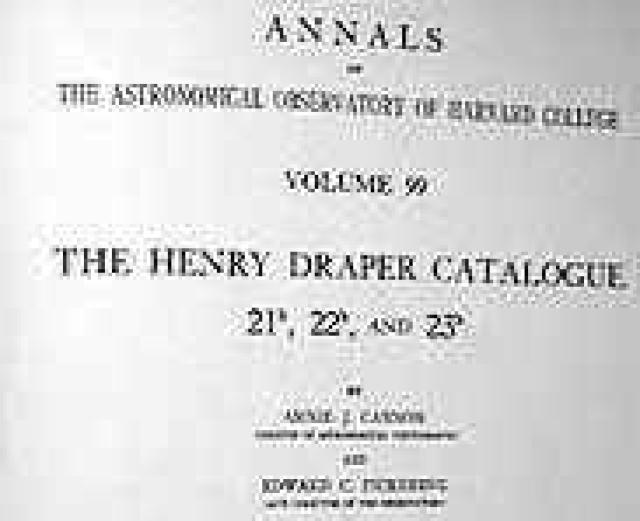
Henry Draper's untimely death at the age of 45 from pleurisy did not diminish his impact on astronomy. His wife, Anna Palmer Draper, established the Henry Draper Memorial Fund at the Harvard Observatory, which allowed astronomers to create the fundamental Henry Draper Catalogue (HD), a comprehensive catalog of stellar spectra. The Draper Catalogue, along with the Harvard spectral classification of stars (O B A F G K M), revolutionized astrophysics and replaced Angelo Secchi's classification system. Over 300,000 stellar spectra were photographed at the Harvard Observatory and the Arequipa Observatory in Peru, founded by Edward and William Pickering. The meticulous processing of these spectra was primarily carried out by Annie Jump Cannon, a dedicated Harvard Observatory employee who devoted over 40 years to the task. Cannon was rightfully awarded the Draper Medal in 1931 for her contributions.
Overall, Henry Draper's pioneering work in astrophotography and his dedication to advancing the field of astronomy have left a lasting legacy.




