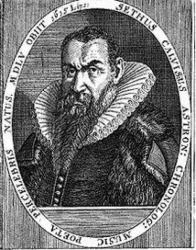
Giuseppe Maria Asclepi
 Italy
Giuseppe Maria Asclepi was an Italian Jesuit astronomer, mathematician and physicist whose work ranged from planetary observation to the mechanics of falling bodies. He taught at several Italian colleges and held the mathematics chair at Rome’s Collegio Romano, where he helped establish a permanent astronomical observing program. His published observations of celestial events formed part of the wider eighteenth-century effort to understand the motions and scale of the solar system.
Early Life and Education
Asclepi was born on April 21, 1706. Older biographical references identify Macerata as his birthplace, while local historical research published in 2024 has argued that he was born in Sant’Elpidio a Mare and that his family later moved to Macerata. He entered the Society of Jesus and pursued a life that joined religious vocation with teaching and scientific inquiry.
His early career took him to Perugia, where he taught philosophy, and to Siena, where he taught physics. Such posts were characteristic of Jesuit scholars of the period, who taught across disciplines while maintaining an active interest in mathematics and the natural sciences.
Astronomy at the Collegio Romano
Around 1760, Asclepi succeeded fellow Jesuit scientist Ruggero Boscovich in the mathematics chair at the Collegio Romano, one of the Society of Jesus’s leading educational institutions. He held the post until 1773. In Rome, he observed and described celestial phenomena and worked to improve the instruments and methods used to study them. By 1764 he had organized a permanent astronomical establishment at the college.
Among his subjects were planetary diameters and the apparent paths of celestial bodies. He used an objective micrometer to measure planets and published observations related to the transit of Venus across the Sun in 1761. The transit attracted astronomers across Europe because careful observations from different locations could help estimate the Sun’s parallax and distance. Asclepi also attempted a determination of the solar parallax from observations of the Sun, though the result did not provide a reliable measurement.
His interests reached beyond observational astronomy. He wrote about the motion of falling bodies in a resisting medium and explored questions in mechanics and hydrostatics. These varied studies reflected the close relationship between mathematics, physics and astronomy in eighteenth-century scientific work.
Works and Scientific Legacy
Asclepi published a number of Latin works and scientific exercises through the Collegio Romano. They included studies on the use of micrometers for measuring planetary diameters, the monthly parallax of the Sun and the motion of heavy bodies through a resisting medium. His writings document how scholars of the era combined instrument-based observation with mathematical analysis.
The Society of Jesus was suppressed in 1773, the same year Asclepi’s tenure at the Collegio Romano ended. He died in Rome on July 21, 1776, aged 70.
Asclepi’s name is less widely known today than that of some contemporaries, but he contributed to the scientific life of the Roman College at a time when astronomy was becoming increasingly collaborative and measurement-driven. His work on transits, planetary observation and solar parallax formed part of the wider eighteenth-century effort to turn observations of the heavens into precise accounts of the structure of the solar system.