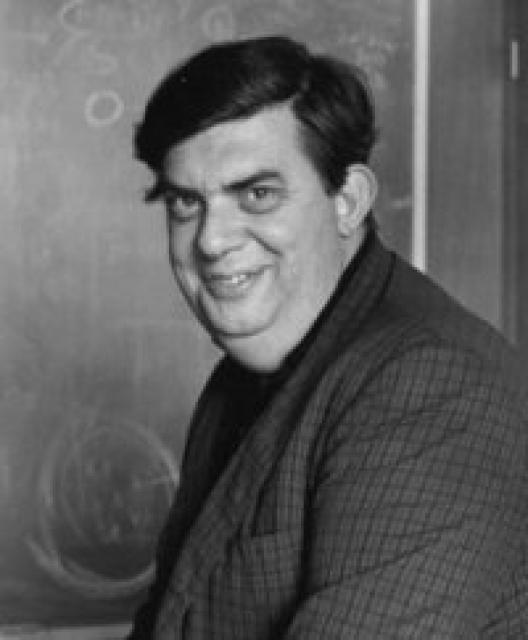
Geoffrey Burbidge
 Great Britain
- Geoffrey Burbidge: A Renowned Astrophysicist
- Early Career and Research
- Contributions to Nuclear Astrophysics and Galactic Evolution
- Pioneering Research on Quasars
- Later Years and Legacy
Geoffrey Burbidge: A Renowned Astrophysicist
Geoffrey Burbidge, an Anglo-American astronomer, was born in Chipping Norton, England. He received his education at the University of Bristol and the University of London.
Early Career and Research
Burbidge began his career as a researcher at the University of London in 1950. He subsequently worked at Harvard University (1951-1952), the Cavendish Laboratory at the University of Cambridge (1953-1955), and the Mount Wilson and Mount Palomar Observatories (1955-1957).
Contributions to Nuclear Astrophysics and Galactic Evolution
Burbidge made significant contributions to nuclear astrophysics, the study of the processes that form heavy elements in stars. He collaborated with E.M. Burbidge, W.A. Fowler, and F. Hoyle on a groundbreaking study (1955-1957) that elucidated the formation of heavy elements through nuclear reactions within stars.
Together with E.M. Burbidge, Burbidge investigated the chemical composition, evolution, and dynamics of galaxies. They determined the masses of numerous galaxies and studied peculiar galaxies characterized by explosive processes.
Pioneering Research on Quasars
In the 1960s, Burbidge and E.M. Burbidge pioneered the study of quasars, highly luminous objects powered by active galactic nuclei. They obtained spectra of many quasars and measured their redshift, providing insights into their immense distances and energy outputs.
Later Years and Legacy
Burbidge was elected a Fellow of the Royal Society in 1968. He served as Director of the Kitt Peak National Observatory from 1978 to 1984. He also edited the annual "Annual Review of Astronomy and Astrophysics" from 1974.
Burbidge's contributions to astronomy were recognized with numerous awards, including the Helen Warner Prize of the American Astronomical Society (1959), the Catherine Bruce Medal (1999), and the Gold Medal of the Royal Astronomical Society (2005). Asteroid 11753 Burbidge was named in his honor.


