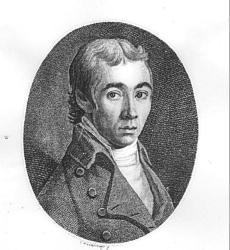
Walter Baade
 Germany
- Walter Baade: Pioneer of Astrophysics and Cosmology
- Early Life and Education
- Move to the United States
- Groundbreaking Discoveries
- Later Career and Legacy
Walter Baade: Pioneer of Astrophysics and Cosmology
Walter Baade, a German astronomer and astrophysicist, made significant contributions to the understanding of galaxies and the origins of the universe. His groundbreaking discoveries transformed our comprehension of celestial bodies and the cosmos at large.
Early Life and Education
Born in 1893 to a teacher in Germany, Walter Baade completed his schooling in 1912. He pursued studies in mathematics, physics, astronomy, and geophysics at the Universities of Münster and Göttingen. Upon graduating from Göttingen in 1918, he joined Hamburg University's observatory, where he focused on comets, asteroids, and variable stars. In 1920, he discovered the asteroid Hidalgo, and in 1924, he identified (1036) Ganymed.
Move to the United States
In 1931, Baade moved to the United States, becoming affiliated with the Mount Wilson Observatory and later the Palomar Observatory, home to some of the world's largest telescopes. In 1933, alongside Fritz Zwicky, he predicted the existence of neutron stars, proposing that they originate from supernova explosions, a hypothesis subsequently validated by observation.
Groundbreaking Discoveries
Baade's meticulous observations of the central region of the Andromeda galaxy in 1943 revealed two distinct populations of stars: the older, metal-poor "Population II" concentrated in the galaxy's core and spherical clusters, and the younger, gas-rich "Population I" concentrated in its spiral arms. These findings laid the foundation for understanding stellar evolution and the formation of galaxies.
In 1949, Baade discovered the asteroid Icarus, whose orbit was found to be inside that of Mercury. He also revised the distance scale of intergalactic distances, doubling its previously accepted value.
Later Career and Legacy
Baade returned to Germany in 1958, joining the University of Göttingen. His later work focused on the structure and evolution of the Milky Way and other galaxies. He received numerous prestigious awards, including the Gold Medal of the Royal Astronomical Society, the Bruce Medal, and the Henry Norris Russell Prize.
Today, Baade's name continues to be synonymous with his remarkable contributions to astronomy. The asteroid 1501 is named in his honor, as is the "Baade's Window," a region of the sky relatively free from interstellar dust that allows for clear observations of the galactic center. A lunar crater also bears his name, commemorating his indelible mark on the study of the cosmos.